Best Ideas for Luxury Villas – Luxury villas have evolved far beyond oversized houses with expensive finishes. Today’s most admired villas combine thoughtful architecture, personalized living spaces, sustainable technology, and timeless aesthetics. Whether you’re building your dream home from scratch or planning to renovate an existing property, the right design decisions can transform a beautiful house into an exceptional living experience.
For beginners, the biggest challenge isn’t finding ideas—it’s choosing the right ones. Social media and design magazines showcase countless stunning villas, but not every trend suits every climate, family, or budget. A truly luxurious villa is one that reflects your lifestyle while remaining functional for years to come.
This guide explores practical and inspiring ideas for luxury villas, explains why each feature matters, and provides professional insights that help you make informed decisions instead of chasing temporary trends.
Luxury Starts with Purpose, Not Price
One of the biggest misconceptions about luxury homes is that they are defined by cost alone. In reality, experienced architects often begin every villa project with a simple question:
How should this home improve everyday life?
The answer shapes every design decision, from the floor plan to the placement of windows.
A well-designed villa should provide:
- Comfortable daily living
- Privacy without isolation
- Strong indoor-outdoor connection
- Efficient movement between spaces
- Long-term durability
- Energy efficiency
- Architectural character
- Flexibility for future family needs
A villa that achieves these goals often feels more luxurious than one filled with expensive materials but poor planning.
Practical Takeaway: Before choosing marble, lighting, or furniture, define how you want to live inside the home.
The LIFE Framework for Planning Luxury Villas
Instead of selecting random features, use this original planning framework.
| Element | Purpose | Questions to Ask |
|---|---|---|
| Lifestyle | Match the villa to daily routines | How will your family use the home every day? |
| Investment | Protect long-term property value | Which features remain desirable after 15 years? |
| Functionality | Improve convenience | Does every room have a clear purpose? |
| Experience | Create emotional impact | Which spaces make guests and residents feel special? |
This approach keeps every investment aligned with practical living instead of temporary design trends.
Practical Takeaway: Evaluate every new feature against all four LIFE principles before approving it.
Why Location Influences Villa Design More Than Most People Realize
Luxury design begins long before construction starts.
The surrounding environment determines how comfortable and efficient the villa will be throughout the year.
For example:
A villa overlooking mountains may maximize panoramic glass walls.
A tropical villa requires better ventilation and shaded outdoor areas.
A coastal property needs corrosion-resistant materials.
An urban luxury villa may focus on privacy, landscaping, and noise reduction.
Ignoring local conditions often results in higher maintenance costs and lower comfort.
Professional designers usually study:
- Sun direction
- Prevailing wind
- Rainfall
- Soil conditions
- Neighboring properties
- Local building regulations
- Natural views
- Future development nearby
Many homeowners focus only on the building itself, while experienced architects first analyze the land.
Practical Takeaway: Let the site shape the design rather than forcing a standard layout onto every property.
Open Spaces That Feel Grand Without Wasting Space
Large homes often become uncomfortable because oversized rooms lack purpose.
Modern luxury emphasizes openness with functionality.
Instead of creating empty halls, successful villa layouts connect multiple living zones naturally.
Popular combinations include:
- Living room flowing into the dining area
- Kitchen connected to the family lounge
- Library overlooking a courtyard
- Indoor seating extending toward the pool
- Covered terrace linked with the garden
This arrangement improves interaction while maintaining visual elegance.
High ceilings enhance spaciousness without requiring excessive floor area.
Double-height living rooms remain one of the most recognizable features of luxury villas because they introduce natural light and architectural drama simultaneously.
Expert Tip: Avoid designing oversized rooms simply because space is available. Every square meter should contribute to comfort, usability, or aesthetics.
Signature Entrance Ideas That Create a Lasting First Impression
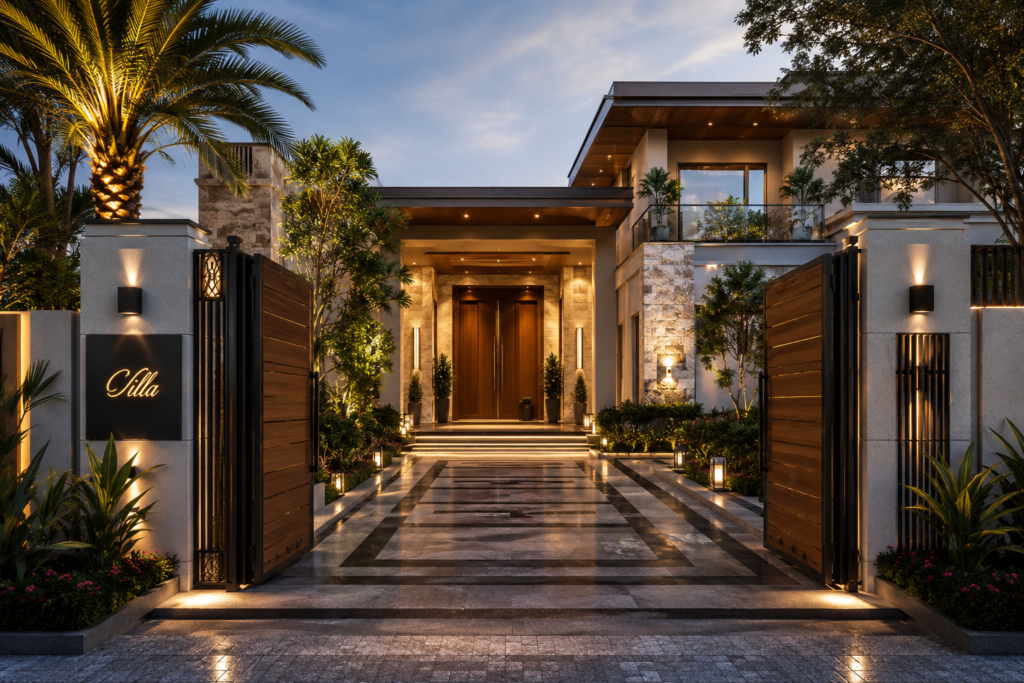
The entrance establishes the personality of the villa.
Rather than relying solely on expensive materials, combine architectural elements to create a memorable arrival experience.
Popular entrance ideas include:
- Floating stone pathways
- Reflecting water features
- Large pivot entrance doors
- Sculptural lighting
- Landscaped courtyards
- Minimalist fountains
- Natural stone walls
- Statement trees
- Covered drop-off zones
A carefully planned entrance also improves security and privacy.
Guests should immediately understand the architectural style before stepping inside.
Practical Takeaway: Treat the entrance as the opening chapter of your home’s story.
Indoor-Outdoor Living That Works Throughout the Year
One feature separates many luxury villas from conventional homes: seamless indoor-outdoor integration.
Instead of viewing gardens as separate spaces, modern villas treat them as additional living rooms.
Ideas include:
Covered Outdoor Lounges
Comfortable seating with weather-resistant furniture allows year-round relaxation.
Outdoor Kitchens
Cooking outside creates an ideal setting for family gatherings and entertaining guests.
Infinity Pools
When positioned correctly, pools visually extend toward surrounding landscapes.
Fire Features
Outdoor fireplaces increase usability during cooler evenings.
Pergolas
Retractable pergolas provide shade without blocking natural light.
Courtyard Gardens
Internal gardens improve privacy while bringing greenery into the center of the home.
Homes designed around outdoor experiences often feel significantly larger than their actual floor area.
Choosing Materials That Age Beautifully
Luxury isn’t about using the most expensive materials.
It’s about selecting finishes that remain attractive after years of use.
Experienced designers often prioritize natural materials because they develop character over time.
Common choices include:
| Material | Advantages | Ideal Applications |
|---|---|---|
| Natural Stone | Durable and timeless | Exterior walls, flooring |
| Hardwood | Warm appearance | Living rooms, bedrooms |
| Engineered Quartz | Low maintenance | Kitchens |
| Concrete | Modern aesthetic | Structural features |
| Glass | Maximizes light | Facades |
| Metal Accents | Contemporary elegance | Staircases and railings |
Mixing textures generally produces better visual results than using one material throughout the property.
For example, stone, wood, and glass create a balanced, inviting appearance, while too much polished marble can make interiors feel cold despite its premium price.
Practical Takeaway: Focus on durability and harmony instead of simply selecting premium-priced finishes.
Smart Kitchens Designed for Everyday Luxury
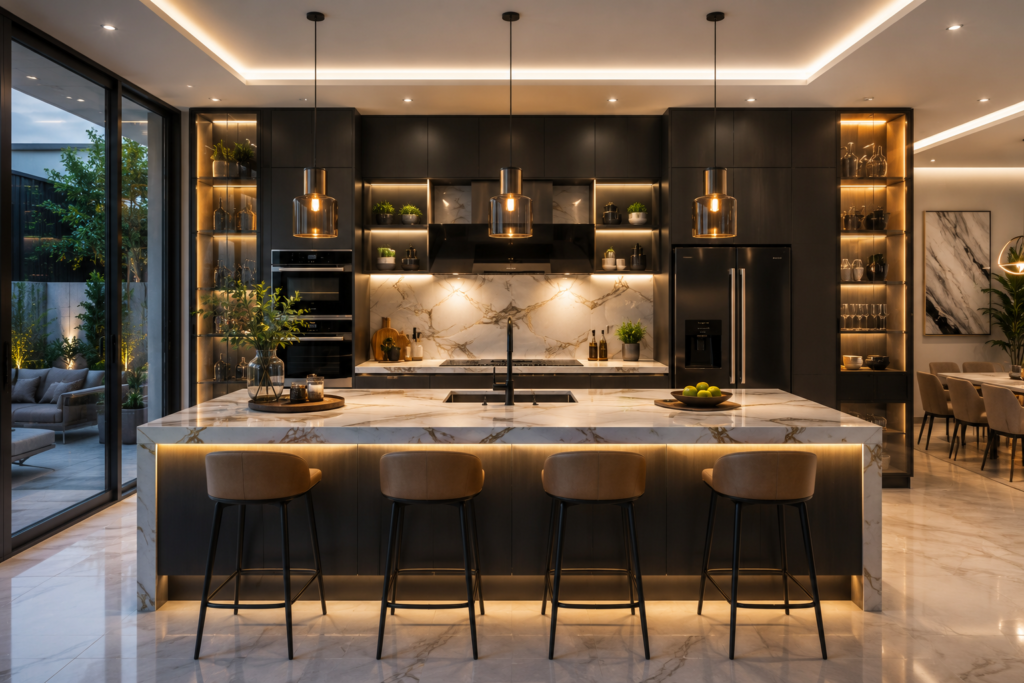
Luxury kitchens are becoming highly personalized.
Instead of displaying every appliance, designers increasingly conceal storage to create clean visual lines.
Ideas worth considering include:
- Walk-in pantry
- Hidden preparation kitchen
- Large kitchen island
- Built-in coffee station
- Wine refrigerator
- Smart appliances
- Touchless faucets
- Under-cabinet lighting
- Natural ventilation
- Integrated charging stations
Families who frequently entertain guests often separate food preparation from serving areas.
This keeps the main kitchen visually organized even during large gatherings.
Bedrooms That Feel Like Boutique Hotel Suites
Luxury bedrooms should promote relaxation rather than excessive decoration.
Key design ideas include:
- Floor-to-ceiling windows
- Private balcony
- Reading corner
- Fireplace
- Walk-in wardrobe
- Sitting lounge
- Acoustic insulation
- Smart lighting scenes
- Automated curtains
- Spa-inspired ensuite bathroom
The master suite increasingly functions as a private retreat within the villa rather than simply a place to sleep.
Designers often divide it into multiple zones, including a sleeping area, lounge, dressing room, bathroom, and outdoor terrace. This zoning enhances both comfort and privacy.
Spa Bathrooms That Transform Daily Routines
Bathrooms are no longer purely functional spaces.
Today’s luxury villas treat them as wellness environments.
Popular features include:
- Freestanding bathtubs
- Rainfall showers
- Steam rooms
- Heated flooring
- Natural stone finishes
- Skylights
- Indoor plants
- Smart mirrors
- Aromatherapy systems
- Hidden storage
Large mirrors and layered lighting create a brighter atmosphere while improving daily usability.
Ventilation should receive equal attention, as moisture control directly affects long-term maintenance.
Expert Recommendation: Choose timeless materials for bathrooms instead of trend-driven colors. Replacing decorative accessories later is much easier than replacing permanent finishes.
Home Offices Designed for Productivity and Privacy
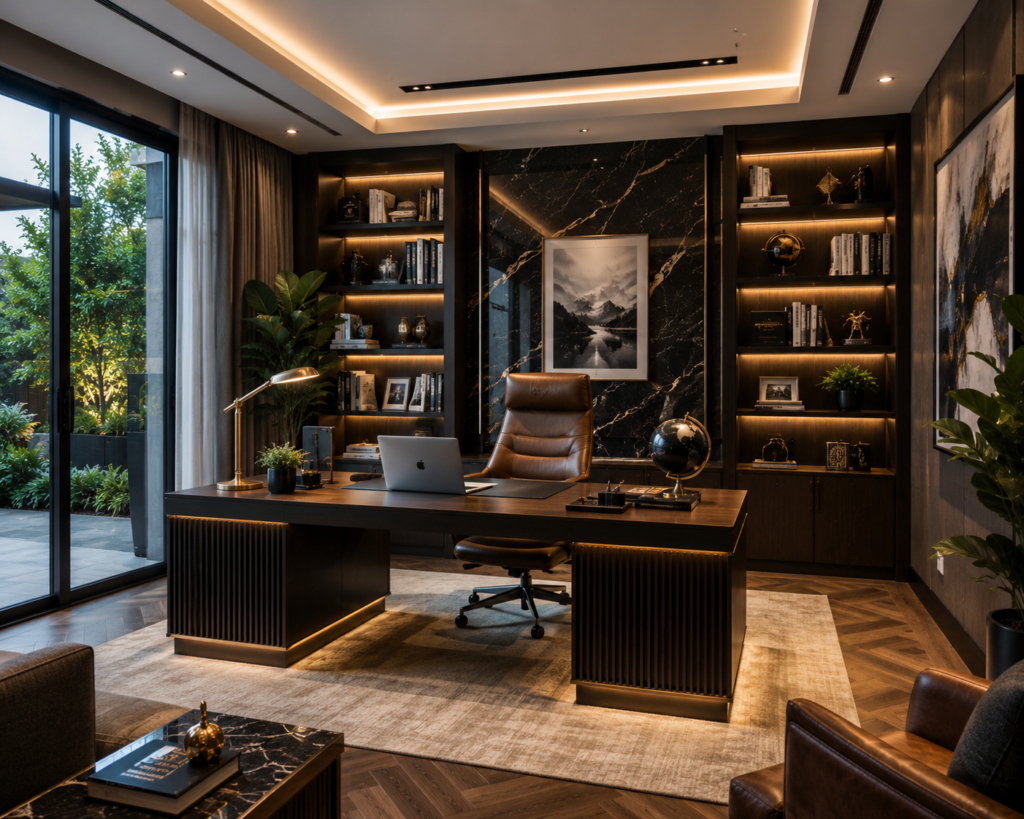
Remote work has permanently changed luxury home design.
Dedicated workspaces are becoming essential rather than optional.
An effective villa office includes:
- Sound insulation
- Natural daylight
- Ergonomic furniture
- Video conferencing lighting
- Built-in storage
- Separate meeting area
- Fast wired internet
- Backup power solutions
Positioning the office away from children’s play areas helps maintain concentration.
For business owners, a private entrance can also allow professional meetings without disturbing family life.
Creating Entertainment Spaces That Bring People Together
The most memorable villas offer experiences beyond beautiful interiors.
Entertainment areas encourage families and guests to spend meaningful time together.
Popular additions include:
- Private cinema
- Game room
- Indoor bar
- Wine cellar
- Music lounge
- Library
- Golf simulator
- Indoor sports court
- Rooftop lounge
- Observation deck
Rather than installing every possible feature, prioritize spaces your household will genuinely use.
For example, avid readers may gain more value from a custom library than from a rarely used cinema room.
Quick Comparison: Classic Luxury vs Contemporary Luxury Villas
| Feature | Classic Luxury | Contemporary Luxury |
|---|---|---|
| Architecture | Ornate detailing | Clean geometric lines |
| Materials | Marble, wood, decorative stone | Glass, concrete, steel, timber |
| Color Palette | Rich warm tones | Neutral and earthy shades |
| Windows | Symmetrical | Large panoramic glazing |
| Technology | Traditional systems | Smart home integration |
| Outdoor Spaces | Formal gardens | Lifestyle-focused landscapes |
| Interior Style | Decorative elegance | Minimalist sophistication |
Neither approach is inherently better. The right choice depends on personal taste, climate, maintenance expectations, and long-term goals.
Section Takeaway: The most successful luxury villas are thoughtfully planned rather than simply expensive. Prioritizing functionality, site-specific design, quality materials, and lifestyle-focused spaces creates a home that remains beautiful, comfortable, and valuable for decades. In the next part, we’ll explore advanced luxury villa ideas including wellness amenities, sustainable innovations, smart home ecosystems, landscaping strategies, common design mistakes, implementation roadmaps, and future trends shaping premium residential architecture.
Wellness Features That Turn a Villa Into a Personal Retreat
Modern luxury is increasingly defined by well-being rather than extravagance. Homeowners now seek spaces that help them recharge physically and mentally without leaving home.
Instead of adding wellness features as an afterthought, successful villa designs integrate them from the beginning.
Popular wellness additions include:
- Home spa with massage room
- Meditation pavilion overlooking a garden
- Yoga studio with natural light
- Infrared sauna
- Steam room
- Cold plunge pool
- Indoor lap pool
- Fitness studio
- Outdoor exercise deck
- Quiet reading courtyard
Natural materials such as wood, stone, linen, and indoor greenery create a calm atmosphere while improving the connection between indoor and outdoor spaces.
Practical Takeaway: Wellness spaces deliver the greatest value when they support habits you already enjoy instead of following luxury trends.
Smart Home Technology That Adds Real Convenience
Technology should simplify everyday life without becoming complicated.
The most successful luxury villas hide technology behind intuitive controls, allowing homeowners to manage the entire property from a smartphone or voice assistant.
Common smart home features include:
- Intelligent lighting schedules
- Automated curtains
- Multi-zone climate control
- Smart irrigation systems
- Security cameras
- Motion sensors
- Digital door locks
- Video doorbells
- Energy monitoring
- Whole-home Wi-Fi systems
Some advanced villas also use artificial intelligence to learn household routines and automatically adjust lighting, temperature, and security settings throughout the day.
Before selecting any smart system, confirm that future software updates and technical support will remain available for years.
Expert Recommendation
Choose platforms that support multiple brands instead of locking yourself into one manufacturer’s ecosystem.
Sustainable Luxury Is Becoming the New Standard
Luxury no longer means consuming more resources.
Today’s premium villas increasingly focus on environmental responsibility without sacrificing comfort.
Sustainable design ideas include:
- Solar panels
- Rainwater harvesting
- Greywater recycling
- Energy-efficient windows
- Green roofs
- High-performance insulation
- LED lighting
- Native landscaping
- Smart irrigation
- Electric vehicle charging stations
These improvements often reduce operating costs while increasing long-term property value.
Natural ventilation and passive cooling strategies can also reduce dependence on air conditioning, especially in warmer climates.
Comparison: Traditional vs Sustainable Villa Features
| Feature | Traditional Approach | Sustainable Approach |
|---|---|---|
| Energy | Conventional electricity | Solar and battery backup |
| Water | Municipal supply only | Rainwater harvesting |
| Cooling | Heavy AC usage | Passive ventilation |
| Landscaping | High water consumption | Native drought-resistant plants |
| Lighting | Standard fixtures | LED smart lighting |
| Maintenance | Higher operating costs | Lower lifetime costs |
Practical Takeaway: Sustainable upgrades often provide both environmental and financial benefits over the life of the property.
Landscape Design That Completes the Luxury Experience
A villa should feel connected to its surroundings rather than sitting on an empty plot.
Professional landscape designers often divide outdoor spaces into functional zones instead of treating the garden as one large lawn.
Examples include:
- Arrival garden
- Entertainment lawn
- Children’s play area
- Herb garden
- Private meditation corner
- Outdoor dining space
- Pool terrace
- Walking paths
- Water features
- Fruit orchards
Lighting plays a major role after sunset.
Layered landscape lighting highlights architectural details while improving safety and creating atmosphere.
Native plants generally require less maintenance than exotic species and adapt better to local weather conditions.
Privacy Without Feeling Closed Off
Luxury homeowners value privacy, but high walls alone rarely create an inviting environment.
Architects often use multiple design strategies together, including:
- Courtyard layouts
- Strategic landscaping
- Privacy screens
- Vertical gardens
- Water features to reduce noise
- Offset window placement
- Layered fencing
- Mature trees
These approaches preserve openness while limiting unwanted visibility.
Designing Flexible Spaces for Future Needs
Families change over time.
Children grow up.
Parents may move in.
Work patterns evolve.
Planning for flexibility ensures that the villa remains practical for decades.
Ideas include:
- Convertible guest suites
- Multipurpose recreation rooms
- Expandable home offices
- Accessible ground-floor bedrooms
- Modular furniture
- Future elevator provisions
- Adaptable storage spaces
Thinking ahead during construction is significantly less expensive than major renovations later.
Luxury Villa Features Worth the Investment
Not every premium feature delivers the same long-term value.
The following table compares common upgrades.
| Feature | Lifestyle Value | Property Value | Maintenance |
|---|---|---|---|
| Infinity Pool | Excellent | High | Moderate |
| Home Theater | High | Moderate | Moderate |
| Smart Home System | Excellent | High | Low |
| Solar Power | Excellent | High | Low |
| Wine Cellar | Lifestyle specific | Moderate | Low |
| Outdoor Kitchen | High | High | Moderate |
| Spa Bathroom | Excellent | High | Low |
| Rooftop Lounge | High | Moderate | Moderate |
Features that improve everyday living generally offer better returns than rarely used luxury additions.
Decision Checklist Before Finalizing Your Villa Design
Before approving architectural plans, ask yourself:
- Does every room have a clear purpose?
- Will the layout suit your lifestyle five years from now?
- Is natural light maximized?
- Are outdoor spaces usable throughout the year?
- Have maintenance costs been considered?
- Is storage sufficient?
- Are sustainability features included?
- Is privacy balanced with openness?
- Can technology be upgraded easily?
- Does the design fit the local climate?
Completing this checklist helps avoid expensive design changes during construction.
Common Mistakes to Avoid
Even high-budget villa projects sometimes fall short because of avoidable planning mistakes.
The most common include:
Prioritizing Appearance Over Function
Beautiful spaces become frustrating if they do not support daily routines.
Ignoring Climate
Glass-heavy homes in hot regions may require excessive cooling without proper shading.
Following Temporary Trends
Interior trends change quickly.
Timeless architecture generally retains value longer.
Underestimating Storage
Luxury homes still require organized storage for everyday living.
Overspending on Rarely Used Spaces
Instead of building every luxury feature, prioritize those that improve daily life.
Neglecting Outdoor Areas
Landscaping should receive the same attention as interior design.
Practical Takeaway: Great villas succeed because of thoughtful planning, not simply larger budgets.
Implementation Roadmap for Building a Luxury Villa
Following a structured process reduces delays and unexpected costs.
Stage 1: Define Your Lifestyle
Identify how your family will use the property.
Stage 2: Select the Right Site
Evaluate orientation, access, regulations, and future development.
Stage 3: Establish Your Budget
Include construction, landscaping, furniture, permits, technology, and contingency funds.
Stage 4: Assemble the Right Team
Work with experienced architects, engineers, interior designers, and landscape professionals.
Stage 5: Finalize the Master Plan
Ensure every design decision supports your long-term goals.
Stage 6: Choose Durable Materials
Balance aesthetics with maintenance and longevity.
Stage 7: Integrate Smart Technology
Plan wiring and automation before construction begins.
Stage 8: Complete Landscaping
Finish outdoor living spaces alongside interior work.
Stage 9: Conduct Final Quality Checks
Inspect every system before moving in.
Future Trends Shaping Luxury Villas
Luxury homes continue to evolve alongside technology and changing lifestyles.
Emerging trends include:
- AI-powered home management
- Net-zero energy villas
- Indoor food gardens
- Biophilic architecture
- Wellness-focused master suites
- Flexible hybrid workspaces
- Touch-free automation
- Water-efficient landscapes
- Carbon-conscious construction materials
- Personalized lighting environments
Rather than chasing every innovation, homeowners should adopt technologies that improve comfort while remaining practical over the long term.
Expert Recommendation
Think beyond today’s needs.
The best luxury villas are designed to remain functional, efficient, and visually appealing for decades rather than simply impressing visitors during the first few years. Prioritize timeless architecture, durable materials, adaptable layouts, and sustainable technologies that continue adding value throughout the life of the property.
Frequently Asked Questions (Best Ideas for Luxury Villas)
What makes a villa truly luxurious?
A luxury villa combines thoughtful architecture, premium materials, functional layouts, privacy, advanced technology, and personalized living experiences rather than focusing only on size or cost.
Are smart home systems worth installing?
Yes. Reliable smart systems improve convenience, security, and energy efficiency while making daily living more comfortable and helping future-proof the property.
Which luxury villa feature adds the most long-term value?
Features such as energy-efficient construction, smart home integration, spa-inspired bathrooms, outdoor entertainment areas, and high-quality landscaping often provide strong lifestyle and resale value.
Can luxury villas be environmentally friendly?
Absolutely. Solar energy, rainwater harvesting, efficient insulation, native landscaping, and sustainable building materials allow luxury homes to reduce environmental impact without sacrificing comfort.
Should I follow current luxury design trends?
Use trends selectively. Timeless architecture and neutral materials usually age better than fashionable finishes that may become outdated within a few years.
How important is landscaping in a luxury villa?
Landscaping is essential. A professionally designed outdoor environment enhances privacy, improves curb appeal, increases usable living space, and strengthens the connection between the villa and its surroundings.
Final Thoughts
Best Ideas for Luxury Villas is about much more than selecting expensive finishes or building a larger home. The most successful villas reflect the people who live in them, balancing beauty with practicality, comfort with efficiency, and innovation with timeless design.
From site selection and architectural planning to wellness spaces, smart technology, sustainable construction, and carefully designed landscapes, every decision contributes to the overall living experience. By focusing on long-term functionality instead of short-lived trends, homeowners can build a villa that remains elegant, valuable, and enjoyable for generations.
Whether you are planning your first luxury residence or upgrading an existing property, begin with a clear vision, work with experienced professionals, and invest in features that genuinely enhance your everyday life. A thoughtfully designed villa is more than a prestigious address—it is a home built to support your lifestyle today while adapting to the needs of tomorrow.