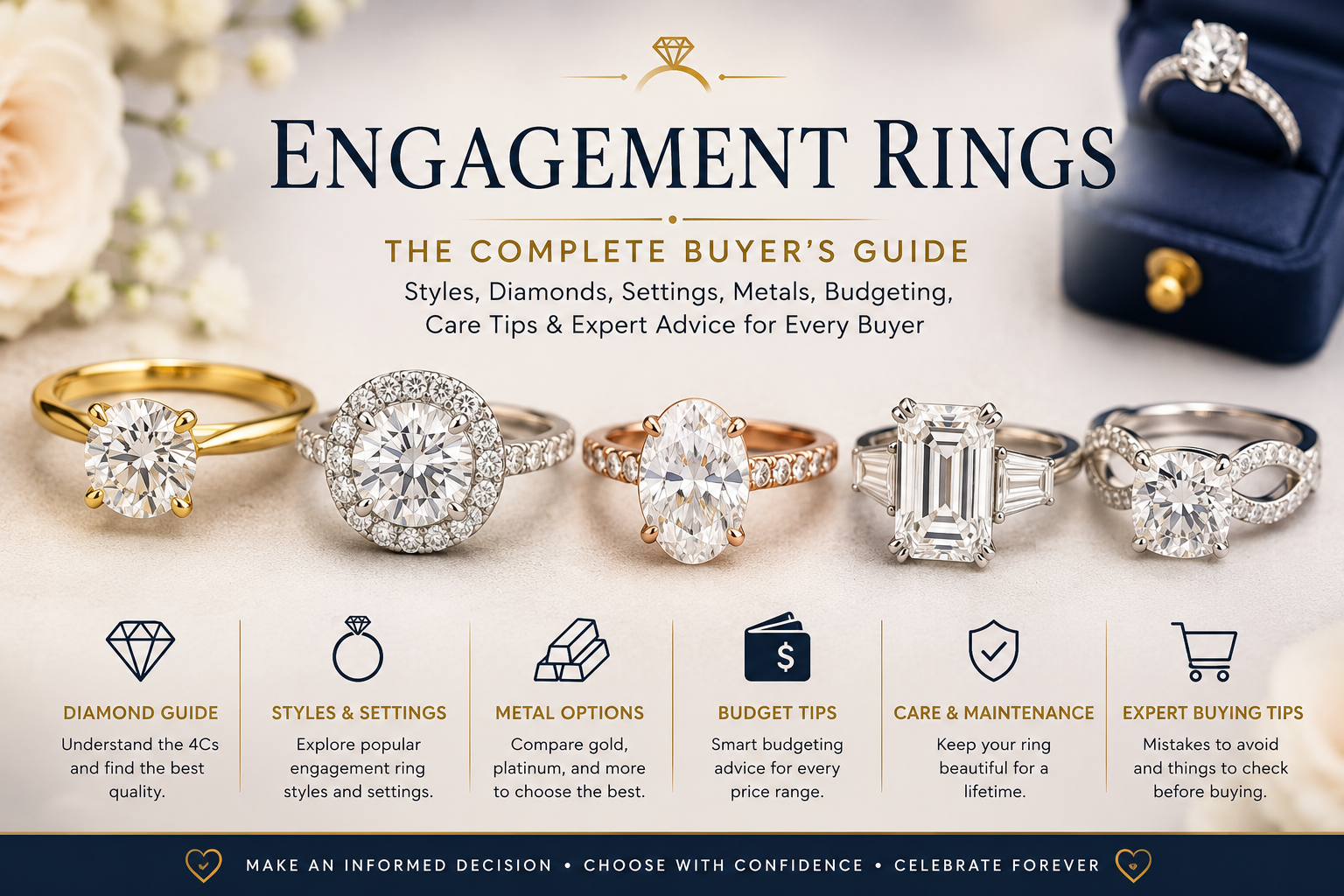


An engagement ring is more than a piece of jewelry. It represents commitment, shared goals, and the beginning of a new chapter. While traditions differ around the world, the purpose remains the same: to celebrate a promise between two people.
Choosing an engagement ring can feel overwhelming. There are countless styles, gemstones, metals, and price points available. Many first-time buyers worry about making the wrong choice or spending more than necessary. The good news is that finding the right ring does not require expert knowledge. It requires understanding what matters most to the person who will wear it every day.
This guide of dgmnews6.com explains everything in simple language. Instead of focusing only on trends, it helps you understand how to balance beauty, durability, comfort, and value. Whether your budget is modest or generous, you will learn how to choose a ring that remains meaningful for years to come.
Why Engagement Rings Matter Beyond Tradition
Many people associate engagement rings with romance, but their significance goes much deeper. A well-chosen ring tells a personal story. It reflects individual taste, shared memories, and the future a couple plans to build together.
Modern buyers are moving away from outdated rules about how much they should spend. Instead, they prioritize quality, ethical sourcing, practicality, and designs that suit everyday life.
A thoughtful purchase often creates more lasting happiness than an expensive purchase made without careful consideration.
Practical takeaway: Focus on meaning and long-term satisfaction rather than social expectations.
Understanding the Four Pillars of a Great Engagement Ring
Instead of beginning with diamonds, start with the complete picture. Every exceptional engagement ring balances four essential elements.
1. Personal Style
Some people prefer timeless elegance, while others enjoy modern, vintage, or minimalist designs. Observe the jewelry your partner already wears.
Ask yourself:
- Do they wear white or yellow metals?
- Are their accessories simple or bold?
- Do they prefer classic fashion or modern trends?
- Is their lifestyle active?
Matching the ring to everyday style often matters more than choosing the largest gemstone.
2. Comfort
An engagement ring is worn almost every day. Comfort should never be overlooked.
Important comfort features include:
- Smooth interior edges
- Proper band width
- Secure stone setting
- Balanced weight
- Comfortable fit for daily wear
A beautiful ring that catches on clothing or feels uncomfortable quickly loses its appeal.
3. Durability
Not every gemstone or setting withstands daily life equally well.
People who work with their hands or lead active lifestyles should prioritize durable materials and protective settings.
4. Budget
A realistic budget creates better decisions.
Instead of stretching finances unnecessarily, divide your budget wisely among:
- Center stone
- Metal
- Ring setting
- Craftsmanship
- Warranty or maintenance
Quality craftsmanship often provides more value than simply increasing gemstone size.
Practical takeaway: Think of an engagement ring as a combination of design, durability, comfort, and value—not just a sparkling stone.
The RingMatch Framework: A Smarter Way to Choose an Engagement Ring
Many buying guides focus only on diamonds. A more practical approach is to evaluate the entire ring using a simple scoring system.
| Factor | Importance | Questions to Ask |
|---|---|---|
| Style Compatibility | High | Does it match everyday jewelry? |
| Comfort | High | Can it be worn daily without irritation? |
| Durability | High | Will it last for decades? |
| Maintenance | Medium | Is it easy to clean and maintain? |
| Budget Fit | High | Does it stay within financial limits? |
| Emotional Meaning | Very High | Does it represent your relationship? |
Before making a purchase, rate each category from 1 to 10. Rings with balanced scores often become the best long-term choices.
Practical takeaway: Never evaluate a ring based only on appearance.
Popular Engagement Ring Styles Explained
Every ring style creates a different visual impression and practical experience.
Solitaire
The solitaire remains one of the most recognizable engagement ring designs.
Features:
- Single center stone
- Elegant appearance
- Timeless design
- Easy maintenance
- Suitable for nearly every occasion
It allows the gemstone to remain the center of attention.
Best for:
- Classic tastes
- Minimalist fashion
- Everyday wear
Halo
A halo ring surrounds the center stone with smaller accent stones.
Benefits include:
- Larger visual appearance
- Extra sparkle
- Luxurious style
- Excellent for medium-sized center stones
Considerations:
Cleaning requires slightly more attention because of the additional small stones.
Three-Stone Rings
This design represents the past, present, and future of a relationship.
Advantages:
- Symbolic meaning
- Balanced appearance
- Greater brilliance
- Opportunity to combine different gemstones
Vintage-Inspired Rings
These rings borrow design details from earlier eras.
Common characteristics include:
- Intricate engraving
- Decorative edges
- Filigree work
- Milgrain detailing
Vintage-inspired designs appeal to buyers seeking individuality rather than modern simplicity.
Modern Minimalist Rings
Minimalist engagement rings continue gaining popularity worldwide.
Characteristics include:
- Clean lines
- Simple settings
- Lightweight appearance
- Comfortable everyday wear
They pair well with contemporary fashion.
Comparing Popular Ring Styles
| Style | Best For | Maintenance | Everyday Wear |
|---|---|---|---|
| Solitaire | Timeless elegance | Easy | Excellent |
| Halo | Maximum sparkle | Moderate | Very Good |
| Three Stone | Symbolism | Moderate | Excellent |
| Vintage | Detailed craftsmanship | Moderate | Good |
| Minimalist | Modern lifestyle | Easy | Excellent |
Practical takeaway: Choose a style that reflects personality rather than temporary fashion trends.
Choosing the Right Metal
The metal influences both appearance and durability.
Yellow Gold
Yellow gold has remained popular for generations.
Benefits include:
- Warm appearance
- Traditional beauty
- Complements many skin tones
- Easy to resize
It works beautifully with vintage and classic designs.
White Gold
White gold offers a bright contemporary appearance.
Advantages:
- Modern look
- Complements diamonds
- Popular worldwide
Keep in mind that white gold may require occasional replating to maintain its bright finish.
Rose Gold
Rose gold has become increasingly popular because of its romantic appearance.
Reasons buyers choose it:
- Unique color
- Warm tones
- Vintage appeal
- Distinctive personality
Platinum
Platinum is often considered a premium choice.
Benefits include:
- Naturally white
- Highly durable
- Resistant to wear
- Excellent for sensitive skin
Although more expensive, platinum can be an excellent long-term investment.
Which Metal Fits Your Lifestyle?
| Lifestyle | Recommended Metal | Why |
|---|---|---|
| Office Work | White Gold | Elegant and versatile |
| Active Lifestyle | Platinum | Exceptional durability |
| Vintage Style | Yellow Gold | Traditional appearance |
| Modern Fashion | Rose Gold | Unique personality |
| Sensitive Skin | Platinum | Hypoallergenic properties |
Practical takeaway: Consider how the ring will be worn every day, not just how it looks in the display case.
Understanding Ring Settings
The setting holds the gemstone securely while defining the ring’s overall appearance.
Prong Setting
The most common engagement ring setting.
Advantages:
- Maximum light exposure
- Brilliant sparkle
- Classic appearance
Possible drawback:
Prongs should be inspected periodically to ensure the stone remains secure.
Bezel Setting
A bezel surrounds the gemstone with metal.
Benefits:
- Outstanding protection
- Modern appearance
- Ideal for active lifestyles
Pavé Setting
Tiny diamonds line the band.
Advantages:
- Extra brilliance
- Elegant appearance
- Luxurious finish
Maintenance requires occasional professional inspection.
Cathedral Setting
The band arches upward toward the center stone.
Benefits:
- Sophisticated design
- Elevated appearance
- Greater visual impact
Practical takeaway: Balance beauty with practicality. A secure setting protects your investment for decades.
How Much Should You Spend on an Engagement Ring?
Many buyers still believe outdated rules suggesting several months of salary should be spent on a ring. There is no universal rule.
Instead, choose a budget based on:
- Monthly income
- Existing financial commitments
- Wedding plans
- Savings goals
- Personal priorities
A ring should celebrate your future together, not create financial stress.
A Practical Budget Framework
Instead of asking, “What is the most expensive ring I can buy?” ask:
- Can I comfortably afford it?
- Will I still meet my savings goals?
- Does the quality justify the price?
- Will this ring remain meaningful in twenty years?
The best engagement ring is one that fits both your relationship and your financial future.
Expert Recommendation
Focus on craftsmanship before size. A well-made ring with an excellent setting and carefully selected stone will often look more beautiful and last longer than a larger ring with poor construction. When in doubt, prioritize quality, comfort, and durability over sheer carat weight.
Quick Buyer’s Checklist
Before moving to the next stage of your search, make sure you can answer “yes” to these questions:
- Does the ring match your partner’s personal style?
- Is the metal suitable for everyday wear?
- Is the setting secure?
- Does it fit comfortably within your budget?
- Will it remain stylish for many years?
- Is the craftsmanship backed by a trusted jeweler?
- Have you considered future maintenance?
If you answered “yes” to most of these questions, you are already making a smarter buying decision than many first-time shoppers.
Looking Beyond Sparkle: What Really Determines a Diamond’s Quality?
A diamond may catch your eye because of its sparkle, but lasting beauty comes from a combination of factors. Jewelers often refer to the 4Cs—Cut, Color, Clarity, and Carat Weight. Understanding these characteristics helps you compare rings confidently without paying for features that may not noticeably improve appearance.
Cut: The Feature That Makes a Diamond Shine
Many beginners assume a larger diamond always looks better. In reality, the quality of the cut has the greatest impact on brilliance.
A well-cut diamond reflects light evenly, creating the bright sparkle most people admire. Even a smaller diamond with an excellent cut can appear more attractive than a larger one with a poor cut.
If your budget allows you to prioritize only one characteristic, choose the best cut you can afford.
Color: Less Color Often Means Greater Value
Diamonds are graded on a color scale ranging from nearly colorless to noticeable yellow or brown tones.
For most buyers, diamonds in the near-colorless range provide an excellent balance between beauty and price. Under normal lighting, many people cannot distinguish between neighboring color grades without specialized equipment.
Instead of chasing the highest possible grade, focus on what looks beautiful to the human eye.
Clarity: Tiny Imperfections Are Usually Invisible
Most diamonds contain natural inclusions formed during their creation deep within the Earth.
The important question isn’t whether a diamond has imperfections—it is whether those imperfections are visible without magnification.
An “eye-clean” diamond often represents outstanding value because it appears flawless during everyday wear while costing significantly less than ultra-high clarity grades.
Carat Weight: Bigger Isn’t Always Better
Carat measures weight rather than physical size.
Two diamonds with identical carat weights may appear different depending on their cut and proportions.
Instead of focusing only on reaching a milestone weight, compare how each diamond looks from above.
Sometimes choosing a slightly smaller stone with a superior cut produces a more impressive appearance.
Practical takeaway: Balance all four characteristics instead of maximizing only one.
The Smart Buy Matrix: Where Your Money Makes the Biggest Difference
| Feature | Visual Impact | Cost Impact | Smart Buying Advice |
|---|---|---|---|
| Cut | Very High | Medium | Prioritize excellent cut quality |
| Color | Medium | High | Choose near-colorless for better value |
| Clarity | Low to Medium | High | Select an eye-clean diamond |
| Carat | High | Very High | Buy for appearance, not numbers |
This balanced approach often helps buyers maximize beauty without exceeding their budget.
Natural Diamonds vs. Lab-Grown Diamonds
One of today’s biggest decisions involves choosing between natural and lab-grown diamonds.
Both options are real diamonds. They share the same chemical composition and physical properties. The primary differences involve origin, rarity, and pricing.
Natural Diamonds
Natural diamonds formed over billions of years beneath the Earth’s surface.
Advantages include:
- Natural rarity
- Traditional appeal
- Strong emotional value
- Long history in engagement jewelry
Considerations:
- Generally higher prices
- Greater environmental concerns depending on mining practices
Lab-Grown Diamonds
Lab-grown diamonds are created in controlled environments using advanced technology.
Benefits include:
- Lower purchase price
- Larger stone for the same budget
- Visually identical to natural diamonds
- Often accompanied by detailed origin information
Things to consider:
- Lower resale value in many markets
- Personal preference may influence the decision
Neither option is universally better. The right choice depends on your priorities.
Comparison Table: Natural vs. Lab-Grown Diamonds
| Feature | Natural Diamond | Lab-Grown Diamond |
|---|---|---|
| Origin | Formed naturally | Created in a laboratory |
| Appearance | Identical | Identical |
| Durability | Excellent | Excellent |
| Price | Higher | Lower |
| Rarity | Limited | Manufactured |
| Emotional Appeal | Traditional | Modern |
| Size Within Budget | Smaller | Larger |
Practical takeaway: Choose the option that aligns with your values, budget, and long-term expectations.
Should You Consider Gemstone Engagement Rings?
Diamonds remain the most popular choice, but colored gemstones are gaining attention for their individuality.
Popular alternatives include:
Sapphire
Known for its deep blue color, sapphire symbolizes loyalty and wisdom.
It is highly durable, making it suitable for everyday wear.
Ruby
Ruby represents passion and love.
Its rich red appearance creates a striking engagement ring.
Emerald
Emerald offers timeless elegance with its distinctive green color.
Although beautiful, emeralds generally require more careful handling than diamonds.
Morganite
Morganite has become increasingly popular because of its soft pink color.
It pairs especially well with rose gold settings.
Practical takeaway: Choose a gemstone that reflects personal meaning rather than simply following tradition.
Ethical Buying: Questions Every Buyer Should Ask
Modern buyers increasingly want to know where their jewelry comes from.
Before purchasing, ask your jeweler:
- Where was the diamond sourced?
- Is it independently certified?
- Does the jeweler follow responsible sourcing practices?
- Are recycled metals available?
- Does the purchase include documentation?
Reputable jewelers are usually happy to answer these questions.
Organizations such as the Gemological Institute of America (GIA) and the American Gem Society (AGS) provide respected grading and educational resources that help buyers make informed decisions.
Finding the Correct Ring Size
An engagement ring should fit securely without feeling tight.
If you’re planning a surprise proposal, consider these discreet methods:
- Borrow a ring your partner already wears on the correct finger.
- Ask a close family member or trusted friend.
- Visit a jeweler together under another pretext.
- Use printable sizing guides carefully, following their instructions.
Avoid estimating based only on hand size, as finger measurements vary significantly.
Factors That Affect Ring Fit
Finger size changes throughout the day due to:
- Temperature
- Exercise
- Humidity
- Travel
- Pregnancy
- Medical conditions
Professional sizing remains the most reliable option.
Practical takeaway: A slightly adjustable ring is often easier to manage than one that fits too tightly.
Custom Engagement Rings: Is Personalization Worth It?
Many couples now choose custom-designed engagement rings instead of ready-made designs.
Customization allows you to select:
- Center stone
- Metal type
- Band width
- Engraving
- Setting style
- Accent stones
Benefits
- One-of-a-kind design
- Personal meaning
- Greater creative freedom
- Better control over budget allocation
Challenges
- Longer production times
- Limited return options
- Requires careful planning
Custom rings work best when you already understand your partner’s style preferences.
Buying Online vs. Buying In-Store
Both shopping methods have advantages.
Online Buying
Benefits include:
- Larger selection
- Competitive pricing
- Convenient comparison
- Access to customer reviews
Things to verify:
- Return policy
- Certification
- Warranty
- High-quality photographs
- Customer support
In-Store Buying
Advantages include:
- View rings in person
- Immediate assistance
- Professional sizing
- Hands-on comparison
Potential limitations:
- Smaller inventory
- Prices may vary
- Less flexibility depending on location
Comparison Table: Online vs. Physical Jewelry Stores
| Factor | Online | Physical Store |
|---|---|---|
| Variety | Excellent | Moderate |
| Convenience | Excellent | Good |
| Personal Assistance | Limited | Excellent |
| Immediate Purchase | No | Yes |
| Price Comparison | Easy | Moderate |
| Try Before Buying | No | Yes |
Practical takeaway: Whichever option you choose, purchase only from reputable retailers that provide transparent documentation and after-sales support.
Mistakes That First-Time Buyers Often Make
Buying an engagement ring is exciting, but emotions can sometimes lead to poor decisions.
Avoid these common mistakes:
Buying Too Quickly
Rushing into a purchase often leads to regret.
Take time to compare designs, materials, certifications, and prices.
Ignoring Lifestyle
A delicate ring may not suit someone with an active profession or hobbies.
Choose a design that matches daily life.
Focusing Only on Carat Weight
Many buyers sacrifice cut quality simply to purchase a larger diamond.
This usually reduces overall beauty.
Forgetting Future Maintenance
Engagement rings require occasional inspections, cleaning, and sometimes resizing.
Include these future costs in your planning.
Buying Without Certification
Always request independent certification for valuable diamonds.
Certification provides confidence in quality and authenticity.
Expert Recommendation Box
Think beyond the proposal day. The perfect engagement ring is one that still feels beautiful after years of daily wear. Prioritize quality craftsmanship, practical durability, ethical sourcing, and a design that reflects your partner’s personality rather than current fashion trends.
Your Engagement Ring Buying Roadmap
Choosing an engagement ring becomes much easier when you follow a structured process.
- Define your overall budget.
- Learn your partner’s style preferences.
- Select the preferred metal.
- Decide between a natural or lab-grown diamond.
- Compare gemstone shapes and settings.
- Focus on cut quality before increasing carat weight.
- Confirm certification and warranty.
- Verify ring size.
- Review return and maintenance policies.
- Purchase with confidence from a trusted jeweler.
Following these steps reduces uncertainty and helps ensure that your investment remains meaningful for many years.
Practical takeaway: The best engagement ring is not necessarily the most expensive one—it is the one that combines quality, comfort, lasting beauty, and personal significance. In the final part, we’ll cover caring for your ring, insurance, long-term maintenance, future engagement ring trends, myths versus facts, frequently asked questions, and a practical conclusion to help you make your final decision.
Protecting Your Engagement Ring for a Lifetime
An engagement ring is designed to be worn often, but daily use exposes it to dust, lotions, soaps, cosmetics, impacts, and changing temperatures. Proper care keeps the ring looking beautiful while protecting its value.
Fortunately, maintaining an engagement ring is easier than many people think.
Create a Simple Cleaning Routine
A quick weekly cleaning can remove oils and dirt that reduce sparkle.
A safe home-cleaning method includes:
- Fill a small bowl with warm water.
- Add a few drops of mild dish soap.
- Soak the ring for 15–20 minutes.
- Gently clean with a soft toothbrush.
- Rinse with clean water.
- Dry using a lint-free microfiber cloth.
Avoid using abrasive cleaners, bleach, chlorine, or harsh chemicals, as these may damage certain metals or gemstones.
Practical takeaway: Gentle, regular cleaning is better than aggressive deep cleaning.
Everyday Habits That Help Your Ring Last Longer
Small habits can significantly extend the life of your engagement ring.
Remove your ring before:
- Weightlifting
- Gardening
- Swimming
- Cleaning with chemicals
- Heavy construction work
- Painting
- Moving furniture
Even durable diamonds can chip if struck at the wrong angle.
When you’re not wearing the ring, store it in a fabric-lined jewelry box or a soft pouch to prevent scratches.
Professional Maintenance Matters
Even the highest-quality rings benefit from professional inspections.
A jeweler can:
- Check loose prongs
- Tighten gemstones
- Polish scratches
- Clean difficult areas
- Inspect the band for wear
Many jewelry stores recommend an inspection every 6–12 months.
Regular maintenance often prevents expensive repairs later.
Practical takeaway: Think of ring maintenance like servicing a car—small checkups help avoid major problems.
Should You Insure an Engagement Ring?
Many people insure their homes and cars but overlook jewelry.
If your engagement ring has significant financial or sentimental value, insurance deserves serious consideration.
Coverage may help protect against:
- Theft
- Loss
- Fire
- Certain accidental damage
- Natural disasters (depending on the policy)
Requirements often include:
- Purchase receipt
- Independent appraisal
- Diamond certificate
- Recent photographs
Insurance terms vary by country and provider, so review policy details carefully before purchasing coverage.
When Should You Consider an Upgrade?
Some couples upgrade engagement rings after major life milestones.
Examples include:
- Fifth anniversary
- Tenth anniversary
- Twenty-fifth anniversary
- Career achievement
- Family milestone
An upgrade doesn’t replace the original memory. Instead, it celebrates the journey you’ve shared together.
Common upgrades include:
- Larger center stone
- Different setting
- Higher-quality diamond
- Platinum band
- Additional side stones
Many couples also preserve the original ring as a family heirloom.
Myths vs. Facts About Engagement Rings
| Myth | Reality |
|---|---|
| Bigger diamonds are always better. | Beauty depends on cut, proportions, and overall design. |
| You must spend several months’ salary. | There is no universal spending rule. Buy what fits your finances. |
| Only diamonds make good engagement rings. | Sapphires, rubies, emeralds, and other gemstones are excellent choices for many couples. |
| Platinum never scratches. | Platinum can scratch, although it remains highly durable. |
| Lab-grown diamonds are fake. | Lab-grown diamonds are real diamonds with the same chemical composition as natural ones. |
| Expensive rings require no maintenance. | Every engagement ring benefits from regular cleaning and inspections. |
Practical takeaway: Make decisions based on facts, not outdated traditions or marketing myths.
Emerging Trends Shaping the Future of Engagement Rings
Engagement ring preferences continue to evolve as buyers place greater importance on individuality, sustainability, and craftsmanship.
Ethical and Responsible Sourcing
Consumers increasingly want transparency about where diamonds and precious metals come from.
Responsible sourcing is becoming a major purchasing factor alongside beauty and price.
Personalized Designs
Instead of choosing mass-produced rings, many couples now create designs that include:
- Hidden gemstones
- Birthstones
- Personal engravings
- Family heirloom diamonds
- Custom band shapes
These small details create rings with unique emotional significance.
Mixed Metals
Combining white, yellow, and rose gold in a single design is becoming increasingly popular.
Mixed-metal rings also pair well with different jewelry collections.
Minimalist Luxury
Many buyers now prefer understated elegance over oversized designs.
Simple settings with exceptional craftsmanship continue to gain popularity because they remain stylish regardless of changing fashion trends.
Lab-Grown Diamond Growth
As technology improves, lab-grown diamonds continue attracting buyers seeking larger stones within fixed budgets.
Natural diamonds remain highly valued, but buyers now have more meaningful choices than ever before.
Decision Checklist Before You Buy
Use this final checklist before making your purchase.
Style
- Does it match your partner’s personality?
- Will it complement everyday clothing?
- Is it timeless rather than overly trendy?
Practicality
- Is the ring comfortable?
- Does the setting protect the gemstone?
- Is the metal suitable for daily wear?
Budget
- Can you comfortably afford it?
- Have you compared similar options?
- Are maintenance costs included?
Trust
- Is the diamond independently certified?
- Does the jeweler offer warranties?
- Are return policies clearly explained?
Long-Term Value
- Will the ring still feel special in twenty years?
- Does it represent your relationship?
- Is it built to last?
If you confidently answer “yes” to these questions, you’re likely making a thoughtful purchase.
Frequently Asked Questions
Which engagement ring style never goes out of fashion?
Solitaire rings remain one of the most timeless choices because their clean design complements changing fashion trends and allows the center stone to remain the focal point.
Is a lab-grown diamond a good choice?
Yes. Lab-grown diamonds are genuine diamonds with the same physical and chemical properties as natural diamonds. They are an excellent option for buyers seeking greater size or quality within a fixed budget.
What is the most durable metal for an engagement ring?
Platinum is widely regarded as one of the most durable precious metals for everyday wear. It is naturally white, resistant to corrosion, and suitable for people with sensitive skin.
Can engagement rings be resized?
Most rings can be resized by experienced jewelers. However, rings with intricate designs or stones around the entire band may have resizing limitations.
How often should an engagement ring be professionally cleaned?
Most jewelers recommend professional cleaning and inspection once or twice a year, depending on how frequently the ring is worn.
Should I buy online or from a local jeweler?
Both options can be excellent. Online retailers often offer greater variety and competitive pricing, while local jewelers provide hands-on guidance, sizing assistance, and in-person service. Choose a reputable seller with transparent certification and return policies.
Final Thoughts
Choosing an engagement ring isn’t about finding the most expensive option—it’s about finding the right one. A meaningful ring reflects your partner’s personality, fits comfortably into your lifestyle, and symbolizes the commitment you are making together.
Take your time to compare styles, understand the materials, and ask questions before making a purchase. Prioritize craftsmanship, durability, ethical sourcing, and trusted certification over marketing claims or outdated spending rules.
The most memorable engagement rings are rarely defined by their size alone. They become treasured because they represent love, shared experiences, and the promise of a future together. By approaching the buying process with knowledge and confidence, you’ll select a ring that continues to tell your story for decades to come.
Other Articles

How to Remove Coffee Stains from Carpet