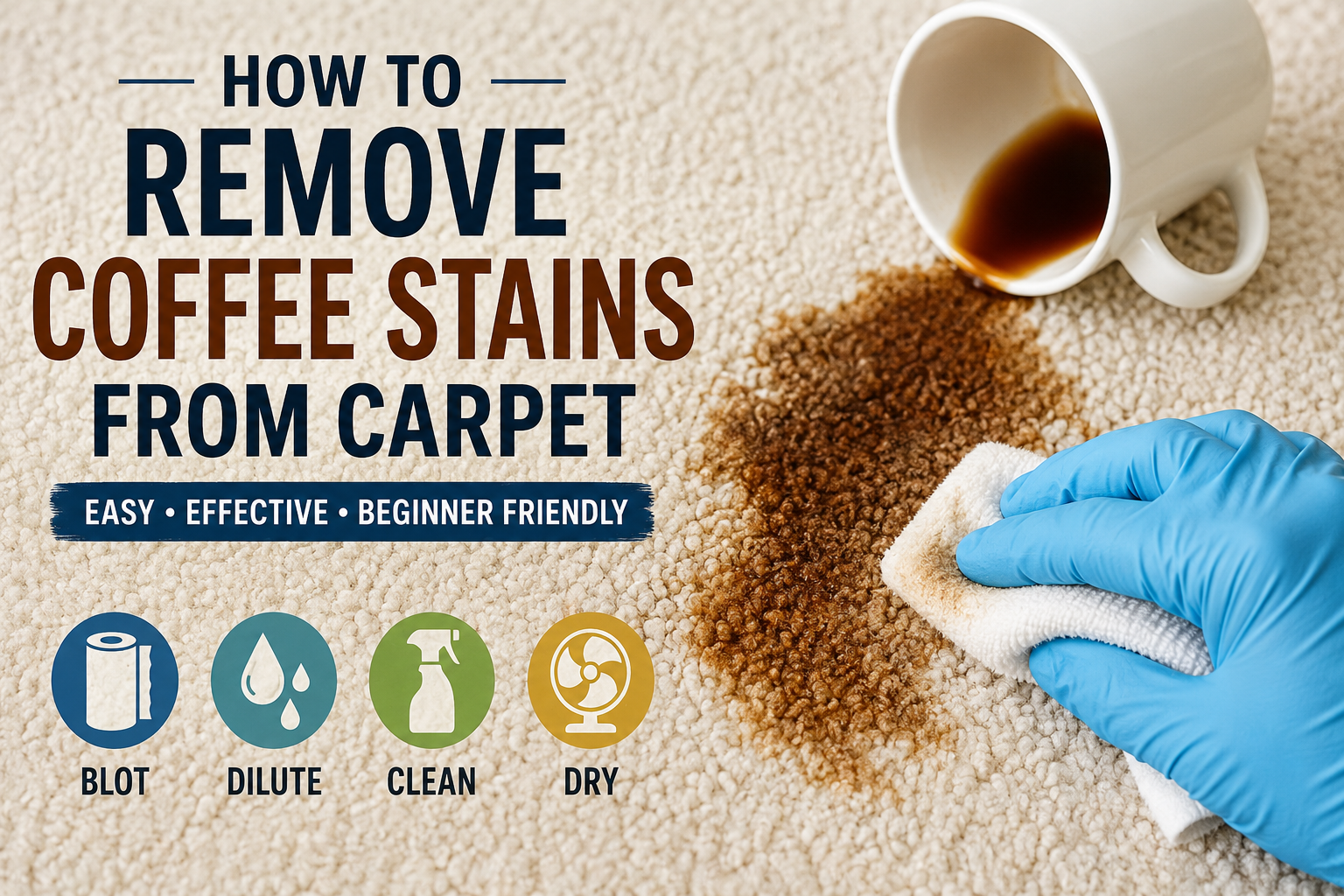
How to Remove Coffee Stains from Carpet
How to Remove Coffee Stains from Carpet – Few household accidents happen as quickly as a spilled cup of coffee. One moment you’re enjoying your morning drink, and the next you’re staring at a dark stain spreading across your carpet. The good news is that most coffee stains can be removed successfully if you use the right approach. The key is knowing what to do immediately and avoiding cleaning methods that can make the stain worse.
Coffee contains natural pigments called tannins that cling to carpet fibers. If your coffee also contains milk, cream, or sugar, the cleanup becomes more challenging because proteins and sugars can attract dirt and create lingering odors. Acting quickly greatly improves your chances of removing the stain without leaving a mark.
This guide explains not only how to remove coffee stains from carpet but also why certain cleaning methods work, when professional help is necessary, and how to prevent future stains. Whether you have synthetic carpeting, wool carpet, or an expensive area rug, you’ll find practical advice you can use with confidence.
If you’re reading this guide on dgmnews6.com, remember that patience is just as important as the cleaning solution. Rushing the process often causes permanent damage.
Why Coffee Stains Are More Difficult Than They Look
Many people assume coffee is simply a dark-colored liquid. In reality, coffee contains natural acids, oils, and tannins that bond with carpet fibers. Once the liquid dries, these compounds become harder to remove.
Several factors influence how difficult the stain will be:
- The temperature of the coffee
- Whether it contains milk or cream
- Whether sugar or flavored syrup was added
- The type of carpet fiber
- How long the stain has been sitting
- Previous cleaning attempts
A fresh black coffee spill is usually easier to remove than a sweet latte that has dried overnight.
Practical takeaway: The sooner you begin cleaning, the less likely the stain will become permanent.
Before You Clean: Spend One Minute Assessing the Spill
Instead of reaching for the nearest cleaner, pause for a moment and answer these questions.
Is the coffee still wet?
Wet stains should be blotted immediately. Dry stains require gentle rehydration before cleaning.
What is in the coffee?
Different ingredients leave different residues.
| Coffee Type | Cleaning Difficulty | Special Attention |
|---|---|---|
| Black coffee | Easy | Tannin removal |
| Coffee with milk | Moderate | Protein removal |
| Coffee with sugar | Moderate | Sticky residue |
| Flavored coffee | Difficult | Oils and artificial coloring |
| Coffee with cream and syrup | High | Multiple stain sources |
What type of carpet do you have?
Synthetic carpets usually tolerate mild cleaning solutions well. Wool carpets require gentler products because harsh chemicals can damage natural fibers.
Practical takeaway: Understanding the type of spill helps you choose the safest and most effective cleaning method.
How to Remove Coffee Stains from Carpet – Steps
Professional carpet technicians often describe the first five minutes after a spill as the “recovery window.” During this time, much of the coffee remains near the surface instead of deep inside the carpet backing.
Follow these steps immediately.
Step 1: Stop the Spill from Spreading
Place several clean white paper towels or a white microfiber cloth over the stain.
Avoid colored towels because dyes can transfer onto the carpet.
Do not rub.
Press gently until the towel absorbs as much liquid as possible.
Repeat with fresh towels until very little moisture remains.
Step 2: Use Cold Water
Pour a very small amount of cold water onto the stained area.
Cold water dilutes the coffee without setting the stain.
Warm or hot water may cause proteins in milk-based coffee to bind more tightly to carpet fibers.
Blot again.
Repeat this process two or three times.
Step 3: Check the Progress
Look carefully under good lighting.
If most of the stain has disappeared, continue blotting rather than switching to stronger cleaning products immediately.
Many fresh coffee stains disappear completely using only water and patience.
Expert recommendation
If the stain is shrinking after each round of blotting, continue using the same method. Introducing stronger chemicals too early often creates unnecessary residue that attracts dirt later.
An Original Coffee Stain Recovery Framework
Rather than guessing what to do next, use this four-stage recovery method.
| Recovery Stage | Goal | Best Action |
|---|---|---|
| Absorb | Remove liquid | Blot with white cloth |
| Dilute | Reduce stain strength | Apply cold water |
| Lift | Remove remaining pigments | Mild cleaning solution |
| Restore | Prevent residue | Final rinse and drying |
Many homeowners skip the final restoration step. Unfortunately, leftover detergent becomes sticky and causes the cleaned area to collect dirt faster than the surrounding carpet.
Practical takeaway: Always finish by removing cleaning residue, not just the coffee stain.
A Safe Homemade Cleaning Solution That Works
You do not need expensive stain removers for most fresh coffee spills.
A simple mixture often delivers excellent results.
Mix:
- 2 cups lukewarm water
- 1 teaspoon liquid dish soap
- 1 tablespoon white vinegar
Mix gently instead of creating foam.
Dip a clean cloth into the solution.
Blot the stain from the outside toward the center.
Never pour the solution directly onto the carpet.
Work slowly.
After each round, blot with a dry cloth.
Repeat until the stain becomes lighter.
Finish by blotting with plain water to remove any remaining soap.
Allow the carpet to air dry completely.
Why Blotting Beats Scrubbing Every Time
One of the biggest mistakes homeowners make is scrubbing aggressively.
Scrubbing creates several problems.
It pushes coffee deeper into the carpet.
It frays carpet fibers.
It enlarges the stained area.
It damages carpet texture.
Professional cleaners rely on repeated blotting because it lifts contamination upward rather than forcing it downward.
Think of carpet fibers as tiny drinking straws. Pressing gently allows moisture to move upward into your towel. Scrubbing forces liquid deeper inside those tiny tubes.
Practical takeaway: Gentle pressure removes stains more effectively than aggressive force.
Coffee Stains on Different Carpet Materials
Not every carpet reacts the same way to cleaning.
Understanding the material helps prevent accidental damage.
| Carpet Material | Cleaning Recommendation | Caution |
|---|---|---|
| Nylon | Mild soap and vinegar solution | Avoid oversaturating |
| Polyester | Water-based cleaners work well | Dry thoroughly |
| Olefin | Responds well to blotting | Remove oily residues completely |
| Wool | Use minimal moisture | Avoid ammonia and strong bleach |
| Natural fiber rugs | Spot-test first | Consider professional cleaning |
If you’re unsure about your carpet material, test every cleaning solution on an area hidden beneath furniture before treating the visible stain.
Common Household Products: Helpful or Harmful?
Many online cleaning tips recommend random household ingredients without explaining their effects.
Here’s a practical evaluation.
Generally safe when used correctly
- White vinegar
- Mild dish soap
- Cold water
- Baking soda (for odor control after cleaning)
Use with caution
- Hydrogen peroxide
- Commercial carpet stain removers
- Enzyme cleaners
Avoid
- Chlorine bleach
- Laundry detergent
- Glass cleaner
- Hair spray
- Undiluted ammonia
Using the wrong cleaner may remove the coffee but permanently discolor your carpet.
Decision Checklist: Should You Clean It Yourself?
Before continuing, ask yourself these questions.
✔ Is the stain less than 24 hours old?
✔ Is the carpet color stable?
✔ Has the stain not been treated with multiple chemicals already?
✔ Is the affected area smaller than a dinner plate?
✔ Is the carpet made from common synthetic fibers?
If you answered “yes” to most of these questions, home cleaning is usually a reasonable option.
If several answers are “no,” a professional carpet cleaner may produce better results while reducing the risk of permanent damage.
The next part covers removing old dried coffee stains, treating milk-based coffee spills, eliminating lingering odors, avoiding costly mistakes, deciding when professional cleaning is worthwhile, and maintaining your carpet to prevent future staining.
How to Remove Old Coffee Stains from Carpet
A stain that has dried for several hours or even days requires a different approach. Once coffee dries, the tannins settle deeper into the carpet fibers. Simply applying a cleaner often isn’t enough because the stain must first be loosened.
Step 1: Rehydrate the Stain
Lightly spray the stained area with clean, lukewarm water. The goal is to dampen the fibers, not soak the carpet.
Allow the moisture to sit for three to five minutes.
Step 2: Apply Your Cleaning Solution
Using the homemade mixture from the previous section, gently blot the stain with a clean white cloth.
Work from the outer edge toward the center. This prevents the stain from spreading.
Continue blotting until you notice the stain transferring to the cloth.
Step 3: Repeat if Necessary
Old stains rarely disappear after one attempt.
Instead of scrubbing harder, repeat the process several times.
Multiple gentle cleaning cycles are much safer than one aggressive attempt.
Practical takeaway: Time and patience remove old stains more effectively than stronger chemicals.
Special Care for Coffee with Milk, Cream, or Sugar
Coffee isn’t always just coffee.
Popular drinks such as cappuccinos, lattes, mochas, and flavored coffees contain dairy and sugar that leave behind sticky residues.
These residues attract dust and bacteria if they aren’t removed completely.
Cleaning Process
Blot away any remaining moisture.
Apply a mild dish soap solution.
Gently blot until the residue begins lifting.
Rinse with clean water.
Dry thoroughly using absorbent towels.
If an odor remains after drying, sprinkle a light layer of baking soda over the area.
Leave it overnight.
Vacuum the baking soda the following day.
This simple step often removes lingering smells naturally.
Practical takeaway: Eliminating sticky residue is just as important as removing the visible stain.
What to Do if the Coffee Stain Keeps Coming Back
Sometimes a carpet looks perfectly clean after drying, only for the stain to reappear a day later.
This is called wicking.
Moisture trapped beneath the carpet carries dissolved coffee back to the surface as it dries.
How to Stop Wicking
Blot excess moisture after cleaning.
Place several dry towels over the area.
Add a heavy book for gentle pressure.
Replace damp towels until they remain dry.
Use a fan to speed up drying.
Avoid walking on the damp carpet.
Professional cleaners spend considerable time drying carpets because proper drying prevents recurring stains.
Practical takeaway: A dry carpet is less likely to develop recurring stains or mildew.
Mistakes That Make Coffee Stains Worse
Even well-intentioned cleaning can permanently damage a carpet.
Avoid these common mistakes.
Using Hot Water Immediately
Hot water can set certain stains, especially those containing milk.
Always begin with cold or lukewarm water.
Scrubbing Aggressively
Scrubbing pushes coffee deeper into carpet fibers and damages their texture.
Blot instead.
Using Too Much Cleaner
Excess detergent leaves behind residue that attracts dirt.
Less is usually more.
Mixing Cleaning Chemicals
Never combine different cleaning products without checking their compatibility.
Some chemical combinations can damage carpet fibers or release harmful fumes.
Waiting Too Long
The longer coffee sits, the harder it becomes to remove.
Quick action nearly always produces better results.
Practical takeaway: Most permanent carpet damage results from incorrect cleaning methods rather than the coffee itself.
Myth vs Fact
| Myth | Fact |
|---|---|
| Coffee stains are always permanent. | Most fresh stains can be removed successfully with prompt treatment. |
| More detergent cleans better. | Too much detergent attracts dirt after drying. |
| Scrubbing removes stains faster. | Gentle blotting protects carpet fibers and lifts stains more effectively. |
| Every carpet cleaner works on every carpet. | Different carpet materials require different cleaning approaches. |
| Bleach is the fastest solution. | Bleach can permanently discolor most carpets. |
When Should You Call a Professional Carpet Cleaner?
Home cleaning works well for many situations, but not every stain should be handled yourself.
Consider professional cleaning if:
- The stain covers a large area.
- The carpet is made from wool or another natural fiber.
- Coffee has mixed with wine, juice, ink, or pet stains.
- Multiple DIY attempts have failed.
- An unpleasant odor remains after cleaning.
- The stain continues returning.
Professional cleaners often use hot water extraction equipment that removes contaminants from deep within the carpet backing while controlling moisture levels.
Cost Comparison
| Cleaning Method | Typical Cost | Best For |
|---|---|---|
| DIY homemade solution | Very low | Fresh stains |
| Store-bought carpet cleaner | Low to moderate | Moderate stains |
| Rental carpet cleaning machine | Moderate | Multiple stains |
| Professional carpet cleaning | Higher | Old, large, or valuable carpets |
While professional cleaning costs more initially, it may extend the life of expensive carpeting and prevent replacement costs later.
Expert Recommendation
Use the “One-Hour Rule.”
If you cannot significantly improve the stain within one hour of careful cleaning, stop experimenting with additional products.
Repeated chemical treatments often make professional restoration more difficult.
Instead, document the products you’ve already used and share that information with a carpet cleaning professional.
A Simple Carpet Recovery Roadmap
Immediately
Blot the spill.
Within Five Minutes
Dilute with cold water.
Blot again.
Within Thirty Minutes
Apply a mild cleaning solution.
Remove visible staining.
After Cleaning
Rinse away detergent residue.
Dry the carpet completely.
Within Twenty-Four Hours
Inspect the area in natural daylight.
Repeat gentle cleaning only if necessary.
This structured approach minimizes damage while improving the chances of complete stain removal.
How to Prevent Future Coffee Stains
Removing stains is helpful, but preventing them saves even more time.
Develop these simple habits.
Use spill-resistant travel mugs around carpeted rooms.
Place drinks on stable tables rather than carpeted floors.
Apply a carpet protector after professional cleaning.
Vacuum regularly to prevent dirt from bonding with spills.
Clean small spills immediately before they become permanent.
Rotate furniture occasionally to identify hidden stains early.
Prevention is usually less expensive than restoration.
Looking Ahead: New Trends in Carpet Cleaning
The carpet care industry continues to evolve.
Several developments are making stain removal easier and safer.
Plant-based carpet cleaning solutions are becoming more popular because they reduce harsh chemical exposure.
Low-moisture cleaning systems help carpets dry faster, reducing the risk of mold and recurring stains.
Smart fabric protectors are improving resistance to liquids without changing the carpet’s appearance.
Manufacturers are also developing carpets with built-in stain-resistant technologies that make everyday spills easier to clean.
These innovations won’t eliminate accidents, but they can reduce the effort required to maintain clean carpets.
Frequently Asked Questions
Can coffee stains become permanent?
Yes. If left untreated for an extended period or cleaned incorrectly, coffee stains may permanently discolor carpet fibers. Prompt action significantly improves removal success.
Does baking soda remove coffee stains?
Baking soda is more effective for removing odors than fresh coffee stains. It works best after the stain has already been cleaned.
Is vinegar safe for every carpet?
White vinegar is generally safe for many synthetic carpets when diluted properly. Always test it on a hidden area first, especially on wool or delicate fibers.
Can I use a steam cleaner immediately after a coffee spill?
Not usually. Fresh stains respond better to blotting and mild cleaning solutions first. Steam cleaning may spread moisture if used incorrectly.
Why does my carpet smell after cleaning?
Residual moisture or leftover dairy from milk-based coffee can create odors. Thorough drying and proper rinsing usually solve the problem.
How long should I wait before walking on the cleaned carpet?
Wait until the carpet is completely dry. Walking on damp fibers can attract dirt and flatten the cleaned area.
Final Thoughts
Coffee spills are frustrating, but they don’t have to leave a lasting reminder on your carpet. The most effective stain removal strategy combines quick action, gentle blotting, the right cleaning solution, and complete drying. Understanding your carpet type and avoiding common mistakes will often produce better results than relying on harsh chemicals.
For most fresh spills, a simple homemade solution and careful technique are enough to restore the carpet’s appearance. Older or more complex stains may require patience or professional help, but even then, acting methodically gives you the best chance of success.
Whenever you face another accidental coffee spill, remember this simple formula: blot, dilute, lift, and dry. Following these four steps consistently will help keep your carpets cleaner, extend their lifespan, and reduce the need for costly replacements.