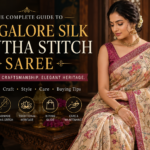
Imagine placing two batik printed pure silk sarees side by side. At first glance, they may appear almost identical. Look closer, and you’ll notice subtle differences in color transitions, hand-painted details, and the natural flow of the motifs. Those differences are not flaws—they are the signature of craftsmanship.
Unlike factory-produced fabrics that are designed for uniformity, authentic batik silk sarees celebrate individuality. Every brushstroke, wax line, and dye layer reflects the artisan’s skill and creative decisions. This makes each saree more than festive clothing; it becomes wearable art with cultural significance.
For first-time buyers, however, distinguishing a genuine handcrafted saree from a mass-produced imitation can be challenging. Product descriptions often use similar terms, while online images rarely reveal the finer details that determine quality.
This guide approaches the topic differently. Instead of simply explaining what a batik saree is, it helps you understand how to evaluate one like an informed buyer. By the end, you’ll know what influences quality, why prices vary, and how to choose a saree that remains beautiful for years rather than just one season.
A Different Way to Buy: Start with the Story, Not the Price
Many shoppers begin by filtering products according to budget. Experienced textile enthusiasts often do the opposite. They first look at the story behind the saree.
Ask yourself these questions before adding any saree to your cart:
- Was it created using traditional batik methods or modern printing?
- Is the silk genuinely pure or blended with synthetic fibers?
- Does the design reflect artistic craftsmanship or repetitive machine patterns?
- Can this saree suit multiple occasions?
- Will it still look elegant five years from now?
These questions shift the focus from cost to value.
The Story Value Framework
| Buying Question | Why It Matters |
|---|---|
| Who made the saree? | Supports artisan craftsmanship and authenticity. |
| How was the design created? | Hand-painted work usually offers greater uniqueness. |
| What type of silk is used? | Pure silk provides better drape, durability, and comfort. |
| Will the design remain timeless? | Classic patterns stay relevant for decades. |
| Is the seller transparent? | Honest product information builds purchasing confidence. |
Practical takeaway: Buying a handcrafted saree is an investment in craftsmanship, not just fashion.
Understanding Batik Beyond Surface Beauty
Batik is often mistaken for a printing technique. In reality, it is an artistic dye-resist process that combines patience, planning, and precision.
The process begins with a blank piece of silk. Instead of applying colors immediately, artisans first protect selected sections using melted wax. These wax-covered areas resist dye, allowing artists to create intricate layers of color over multiple stages.
Every additional color requires another cycle of waxing and dyeing. This careful repetition produces the rich visual depth that distinguishes authentic batik from ordinary printed fabrics.
One of the most admired characteristics of batik is the natural crackle effect. Tiny lines appear where the wax gently cracks before dyeing, creating organic patterns that cannot be perfectly reproduced by machines.
This handcrafted unpredictability is one of batik’s greatest strengths.
Takeaway: Uniform perfection is common in factory production. Natural variation is often a hallmark of genuine batik artistry.
Why Pure Silk Makes the Difference
The same batik design printed on synthetic fabric will never behave like one created on pure silk.
Pure silk responds to movement differently. It catches light softly instead of reflecting it harshly. It drapes naturally around the body without appearing stiff, creating a graceful silhouette.
Beyond appearance, silk also offers practical advantages:
- Lightweight comfort for long events
- Excellent breathability
- Natural temperature regulation
- Smooth texture against the skin
- Long lifespan with proper care
These qualities explain why silk continues to be associated with weddings, celebrations, and family heirlooms across many cultures.
Pure Silk vs. Artificial Alternatives
| Feature | Pure Silk | Synthetic Fabric |
|---|---|---|
| Feel | Soft and luxurious | Often smooth but artificial |
| Shine | Natural luster | Plastic-like gloss |
| Airflow | Breathable | Limited ventilation |
| Durability | Excellent with proper care | Varies widely |
| Value | Long-term investment | Usually lower resale and sentimental value |
Practical takeaway: If you plan to wear the saree repeatedly, investing in pure silk usually delivers greater satisfaction over time.
The Artisan’s Journey: What Happens Before the Saree Reaches You?
A finished saree may take days—or even weeks—to complete.
Designing the Composition
Every handcrafted batik saree begins with an artistic concept. The artisan decides where floral motifs, borders, and decorative elements will appear to create visual balance.
Preparing the Silk
The silk is carefully cleaned and prepared to ensure it absorbs dye evenly.
Wax Detailing
Hot wax is applied by hand using specialized tools. This stage demands concentration because mistakes cannot easily be corrected.
Layered Coloring
Instead of adding all colors at once, artisans build the artwork gradually. Each dye bath adds another dimension to the design.
Removing the Wax
Once the coloring process is complete, the wax is removed to reveal the finished pattern.
Final Inspection
Before reaching customers, the saree is checked for consistency, finishing quality, and overall presentation.
This labor-intensive process explains why handcrafted pieces remain highly valued.
The Five-Layer Quality Inspection Method
Rather than judging a saree only by appearance, examine it through five different perspectives.
Layer 1: Fabric Quality
The silk should feel smooth, lightweight, and naturally soft.
Layer 2: Artistic Balance
Patterns should complement one another without overwhelming the overall design.
Layer 3: Color Harmony
Colors should blend naturally rather than appearing excessively bright or flat.
Layer 4: Finishing
Borders, edges, and pallu details should be neatly completed.
Layer 5: Wearability
Ask whether you can comfortably wear the saree for several hours.
Evaluating these five layers gives a more reliable assessment than relying on photographs alone.
Matching Your Personality to the Right Batik Style
Instead of choosing according to trends, consider your personal style.
| Style Preference | Recommended Batik Design |
|---|---|
| Traditional elegance | Floral hand-painted motifs |
| Contemporary fashion | Abstract batik artwork |
| Minimalist dressing | Soft geometric patterns |
| Cultural celebrations | Heritage-inspired designs |
| Artistic expression | Nature-inspired compositions |
A saree that reflects your personality often remains in your wardrobe much longer than one purchased simply because it is fashionable.
Takeaway: Personal connection adds lasting value beyond appearance.
Common Shopping Habits That Lead to Regret
Many disappointing purchases happen for predictable reasons.
Buying Only Because of Discounts
An unusually low price may indicate synthetic fabric or machine printing.
Ignoring Product Descriptions
Important details about silk purity, weaving, and care are often mentioned in the description rather than the title.
Assuming Every Batik Saree Is Handmade
Many products imitate batik digitally while using marketing terms that sound similar.
Choosing Complicated Designs for Everyday Wear
Highly detailed ceremonial sarees may spend most of their time in storage.
Overlooking Future Styling Options
Think about matching blouses, jewelry, and accessories before making your decision.
Practical takeaway: The best purchase is one you will enjoy wearing repeatedly—not just admire in your wardrobe.
Expert Recommendation
If this is your first batik printed pure silk saree, prioritize craftsmanship over trend-driven colors. Rich jewel tones such as emerald green, royal blue, wine, or maroon rarely go out of style and pair beautifully with both traditional and contemporary accessories. A timeless design offers greater versatility, making it suitable for weddings, festivals, cultural events, and formal gatherings throughout the year.
Looking Beyond Fashion
A handcrafted saree often carries emotional value that grows over time. It may be worn during important family celebrations, passed to future generations, or remembered as part of life’s meaningful milestones.
That lasting connection is difficult to measure in monetary terms. While trends change every season, genuine craftsmanship continues to be appreciated because it reflects patience, artistry, and cultural heritage.
A thoughtfully chosen pure silk hand painted batik print saree is therefore more than an elegant purchase—it becomes a lasting expression of tradition and personal style.
Think Like an Owner, Not Just a Buyer
Owning a batik printed pure silk saree is different from owning everyday clothing. Instead of asking, “How often will I wear this?” ask, “How well can I preserve it?”
Many luxury garments lose their beauty because of poor storage rather than frequent use. A well-maintained silk saree can remain elegant for decades and even become a treasured family heirloom.
The 10-Year Ownership Checklist
| Year | What to Do | Why It Matters |
|---|---|---|
| Every Wear | Air dry before folding | Removes moisture and odors |
| Every 3 Months | Refold differently | Prevents permanent creases |
| Every 6 Months | Inspect for stains | Early treatment avoids damage |
| Once a Year | Professional silk cleaning | Preserves color and texture |
| Long-Term Storage | Use breathable cotton bags | Protects silk naturally |
Practical takeaway: Caring for silk consistently is easier than repairing damaged fabric later.
Styling Framework: One Saree, Multiple Looks
A premium saree should adapt to different occasions instead of staying in your wardrobe.
Wedding Celebration
Pair rich batik artwork with:
- Antique gold jewelry
- Embroidered blouse
- Traditional bun hairstyle
- Silk potli bag
Office Event
Keep styling minimal.
Choose:
- Plain elbow-length blouse
- Pearl earrings
- Elegant watch
- Neutral sandals
Festival Gathering
Enhance the artistic appeal with:
- Temple jewelry
- Fresh flowers
- Traditional bangles
- Matching clutch
Contemporary Evening Event
Blend tradition with modern fashion.
Try:
- Belted saree styling
- Sleeveless blouse
- Statement earrings
- Minimal accessories
The same saree creates completely different impressions depending on styling choices.
Takeaway: Accessories should support the artwork—not compete with it.
The Value Matrix: What Really Determines Price?
Many buyers assume expensive always means better.
Reality is more nuanced.
| Factor | Low Impact | High Impact |
|---|---|---|
| Silk Purity | Mixed fibers | Pure silk |
| Design Process | Machine print | Hand-painted batik |
| Artisan Skill | Basic | Experienced master artisan |
| Color Layers | Single | Multi-stage dyeing |
| Production Scale | Mass production | Limited handcrafted pieces |
Understanding these factors helps you judge value more accurately than price tags alone.
How to Spot a Genuine Seller Online
Online shopping offers convenience, but choosing the right seller is just as important as choosing the saree.
Reliable sellers usually provide:
✓ Multiple close-up photographs
✓ Detailed silk information
✓ Care instructions
✓ Return policy
✓ Fabric specifications
✓ Transparent product descriptions
Avoid listings that rely only on marketing words like:
- Premium
- Luxury
- Designer
- Exclusive
without explaining why.
Trust information over promotional language.
Mistakes That Shorten the Life of Silk Sarees
Even premium silk deteriorates if handled incorrectly.
Folding Along the Same Line
Permanent fold marks can weaken silk fibers.
Using Plastic Covers
Plastic traps moisture.
Moisture encourages mildew.
Hanging Heavy Silk for Years
Long-term hanging stretches the fabric.
Direct Perfume Application
Alcohol-based perfumes may stain silk.
Apply perfume before wearing the saree.
Home Washing with Strong Detergents
Many household detergents damage natural protein fibers.
Professional cleaning is generally safer.
Practical takeaway: Proper maintenance costs far less than replacing a damaged handcrafted saree.
Myths vs Reality
| Myth | Reality |
|---|---|
| Handcrafted means perfect symmetry. | Slight variations show artisan involvement. |
| Pure silk wrinkles easily because it is poor quality. | Natural silk wrinkles differently than synthetics. |
| Bright colors fade quickly. | Proper dyeing and storage preserve color well. |
| Expensive sarees never require maintenance. | Every silk saree benefits from careful storage. |
| Batik is only traditional. | Modern designers create contemporary batik collections too. |
Knowing the truth helps buyers make confident decisions.
A Buyer’s Decision Framework
Before purchasing, score each saree.
Craftsmanship (10 Points)
- Design originality
- Artistic detailing
- Border quality
Fabric Quality (10 Points)
- Silk texture
- Weight
- Drape
Practical Use (10 Points)
- Occasion suitability
- Styling flexibility
- Comfort
Long-Term Value (10 Points)
- Timeless appearance
- Maintenance ease
- Durability
Seller Trust (10 Points)
- Transparency
- Reviews
- Product information
Interpretation
45–50 = Excellent investment
35–44 = Strong choice
25–34 = Compare with alternatives
Below 25 = Continue searching
This framework reduces emotional buying.
Building a Timeless Saree Collection
Instead of purchasing many similar sarees, build a balanced collection.
Foundation Piece
Classic maroon or royal blue batik silk.
Festive Statement
Bright artistic design with intricate pallu.
Elegant Neutral
Beige, ivory, or soft gold.
Contemporary Choice
Abstract hand-painted artwork.
Heritage Collection
Traditional regional batik craftsmanship.
A thoughtfully planned wardrobe provides greater versatility than buying randomly.
Why Sustainability Is Increasing Interest in Handcrafted Silk
Modern consumers increasingly appreciate products that last.
Fast fashion often prioritizes quantity.
Handcrafted textiles prioritize quality.
Choosing artisan-made silk supports:
- Traditional craftsmanship
- Cultural heritage
- Skilled employment
- Slower consumption
- Long-lasting fashion
Although handcrafted products require more time to produce, they generally offer greater longevity.
Future Trends Shaping Batik Silk Sarees
The next generation of batik fashion combines tradition with innovation.
Emerging trends include:
Natural Dye Revival
Growing interest in environmentally conscious dyeing methods.
Contemporary Color Palettes
Muted earthy shades are becoming increasingly popular.
Personalized Designs
Customers increasingly request custom artwork.
Lightweight Luxury
Designers are creating silk sarees suitable for longer wear.
Digital Craft Documentation
Artisans are sharing the creation process through videos, allowing buyers to understand the value behind handmade textiles.
These developments help traditional craftsmanship reach younger audiences worldwide.
Frequently Asked Questions
Is every batik printed pure silk saree handmade?
No. Some products imitate batik using digital or screen printing. Read product descriptions carefully to understand the production method.
How long can a pure silk saree last?
With proper care and storage, genuine silk sarees can remain beautiful for decades.
Is batik suitable for weddings?
Yes. Richly designed batik silk sarees are an excellent choice for wedding guests, family functions, and festive celebrations.
Can beginners buy pure silk?
Absolutely. Choosing versatile colors and understanding basic care requirements makes ownership easy.
Why are handcrafted batik sarees more expensive?
Their price reflects artisan skill, multiple dyeing stages, premium silk, and limited production rather than mass manufacturing.
Final Thoughts: Choosing a Saree That Reflects Your Style
A batik printed pure silk saree represents much more than elegant clothing. It brings together artistic creativity, traditional craftsmanship, and the natural beauty of pure silk. While trends may change from season to season, a thoughtfully selected handcrafted saree continues to feel relevant because it is built on timeless design rather than temporary fashion.
The smartest buyers don’t simply compare prices—they compare craftsmanship, versatility, authenticity, and long-term value. Taking a little extra time to evaluate these factors often leads to a purchase that delivers years of satisfaction.
Whether you’re buying your first saree or expanding a carefully curated collection, choose a piece that tells a story you will be proud to wear. When quality, artistry, and thoughtful care come together, a pure silk hand painted batik print saree becomes more than an outfit—it becomes a lasting expression of heritage, elegance, and personal identity.