Nepal is home to some of the world’s most celebrated trekking routes, from gentle hill walks to demanding Himalayan expeditions. Yet many first-time visitors focus only on choosing a trail while overlooking something equally important—the timing of their journey.
The season you choose can influence almost every part of your trek. Mountain views, trail conditions, accommodation availability, transportation, wildlife sightings, photography opportunities, and even your overall safety are closely linked to the weather. A famous trail can feel completely different in April than it does in July or January.
Instead of asking, “What is the best time for trekking in Nepal?” a better question is, “Which season matches my trekking goals?” Some travelers dream of crystal-clear Himalayan panoramas. Others prefer quieter trails, blooming forests, or lower travel costs.
This guide is designed to help beginners understand the best time of year for trekking in Nepal through practical advice, real-world insights, and an easy decision-making framework rather than a one-size-fits-all answer.
The best time for trekking in Nepal is generally spring (March to May) and autumn (September to November). Spring offers blooming rhododendrons and comfortable temperatures, while autumn provides clear mountain views, stable weather, and excellent trekking conditions for beginners and experienced hikers alike.
Why Timing Matters More Than the Trek Itself
Many visitors believe that selecting a popular route guarantees an unforgettable experience. In reality, weather often has a greater impact than the destination itself.
Imagine trekking to a famous viewpoint only to spend several days surrounded by clouds. On another visit during a different season, the same location may reveal uninterrupted views of snow-covered peaks stretching across the horizon.
Choosing the right season affects:
- Mountain visibility
- Daily walking comfort
- Trail safety
- River crossings
- Wildlife encounters
- Photography conditions
- Availability of tea houses
- Transportation reliability
- Overall trekking budget
A well-timed trek can transform a good itinerary into an extraordinary adventure.
Practical Takeaway: Plan your travel dates before finalizing your trekking route.
A Simple Four-Factor Framework for Choosing the Best Trekking Season
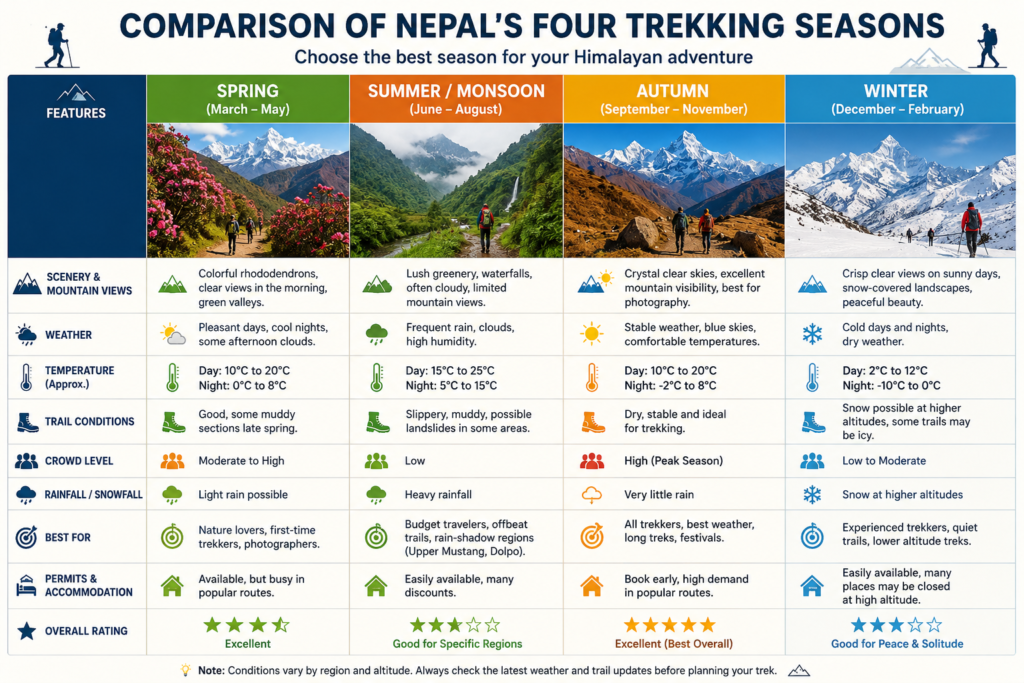
Instead of selecting a season based on popularity, evaluate it using four practical factors.
| Decision Factor | Why It Matters | Questions to Ask Yourself |
|---|---|---|
| Weather Stability | Determines safety and comfort | Do I prefer predictable weather? |
| Mountain Visibility | Affects scenery and photography | Are clear Himalayan views my priority? |
| Trail Crowd Levels | Influences overall trekking experience | Do I enjoy meeting other trekkers or quieter paths? |
| Budget | Changes accommodation and flight costs | Am I traveling on a limited budget? |
Scoring these four areas helps travelers choose a season that matches their expectations rather than following general advice.
Practical Takeaway: There is no universal “best” season—only the best season for your travel style.
Understanding Nepal’s Trekking Climate
Nepal Trekking Season Calendar
Compare every month by mountain visibility, rainfall, crowd levels, temperature, and route suitability. Select your priorities to receive a personalized trekking recommendation.
Select a month
Click any month card to view detailed trekking conditions and recommended regions.
Nepal’s geography changes dramatically within short distances. You can begin your trek in warm valleys and reach snowy alpine landscapes within a few days.
Because altitude changes quickly, temperatures cannot be predicted using city weather forecasts alone.
Generally, Nepal experiences four major trekking seasons:
Spring (March to May)
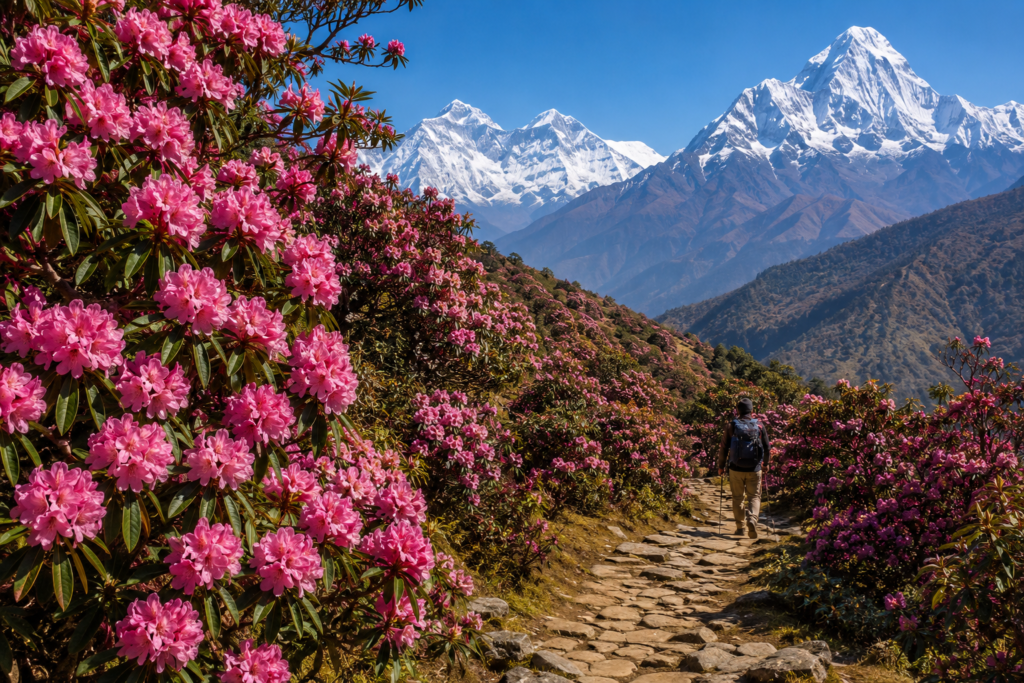
Known for comfortable temperatures and colorful landscapes.
Highlights include:
- Rhododendron forests in bloom
- Longer daylight hours
- Stable weather
- Excellent mountain visibility
- Active wildlife
Summer and Monsoon (June to August)
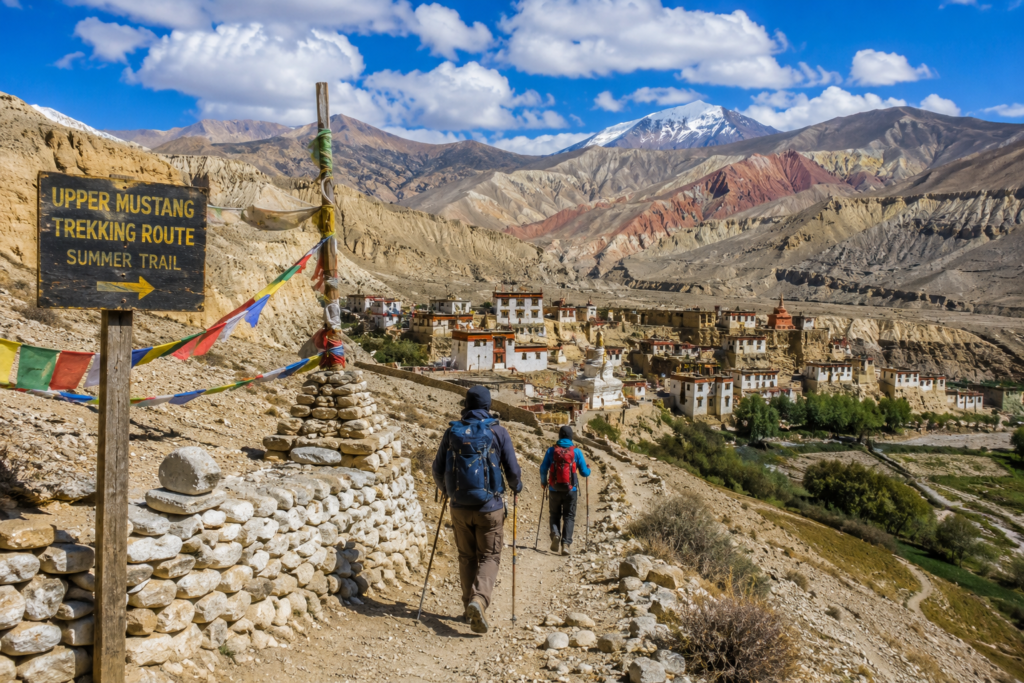
Heavy rainfall affects many regions, although some high-altitude rain-shadow areas remain suitable for trekking.
Typical conditions include:
- Green valleys
- Wet trails
- Frequent clouds
- Fewer tourists
- Occasional transportation delays
Autumn (September to November)
Often considered the most reliable trekking season.
Expect:
- Crystal-clear mountain views
- Pleasant daytime temperatures
- Stable weather
- High trail activity
- Peak trekking season
Winter (December to February)
Cold temperatures dominate higher elevations, but lower-altitude treks remain accessible.
Advantages include:
- Quiet trails
- Snow-covered scenery
- Better accommodation availability
- Excellent visibility on clear days
Practical Takeaway: Nepal’s seasons affect each trekking region differently. Always research the specific trail rather than relying only on national weather patterns.
Spring Trekking: Nature at Its Most Colorful
For many outdoor enthusiasts, spring offers the perfect balance between comfortable temperatures and breathtaking scenery.
As winter snow begins to melt, forests become vibrant with flowering rhododendrons, magnolias, and alpine plants. Hillsides that appear brown during colder months transform into colorful landscapes.
Why Spring Appeals to Beginners
Spring provides moderate temperatures that make long walking days more enjoyable.
Benefits include:
- Comfortable daytime hiking
- Blooming forests
- Longer daylight hours
- Increasing wildlife activity
- Good mountain visibility during mornings
These conditions make spring particularly suitable for people attempting their first Himalayan trek.
Photography Opportunities
Professional photographers often appreciate spring for its variety.
Instead of capturing only snow-covered mountains, they can include:
- Wildflowers
- Traditional villages
- Forest landscapes
- Waterfalls
- Snow peaks framed by colorful vegetation
Morning light typically provides the sharpest mountain views before afternoon clouds begin to develop.
Challenges to Expect
Spring is not perfect.
Possible drawbacks include:
- Popular routes become crowded
- Tea houses fill quickly
- Domestic flights may sell out
- Afternoon haze can reduce visibility
- Prices may increase during peak weeks
Planning ahead becomes especially important during April.
Expert Tip
If your schedule allows, consider trekking in late March or early May instead of the busiest weeks in April. You may enjoy similar weather with fewer crowds.
Practical Takeaway: Spring is ideal for travelers who value natural beauty, comfortable temperatures, and diverse landscapes.
Autumn Trekking: The Season Most Travelers Choose
When people imagine classic Himalayan trekking conditions, they are often thinking about autumn.
Following the monsoon season, rain washes dust from the atmosphere, creating remarkably clear skies.
Mountain ranges appear sharper, rivers become cleaner, and distant peaks remain visible for long periods.
Why Autumn Has Earned Its Reputation
Several factors combine to create favorable trekking conditions.
These include:
- Dry trails
- Reliable weather
- Excellent visibility
- Comfortable temperatures
- Lower risk of heavy snowfall
- Stable transportation schedules
For many trekking agencies, autumn represents the busiest period of the year.
Ideal for Long Treks
Extended routes such as multi-week Himalayan journeys benefit from autumn’s relatively stable weather.
Long expeditions depend on predictable conditions because delays caused by storms or poor visibility can disrupt transportation and logistics.
Festivals Add Cultural Value
Autumn also coincides with several important Nepalese festivals.
Depending on your itinerary, you may experience:
- Decorated villages
- Traditional celebrations
- Local music
- Cultural performances
- Seasonal markets
These experiences allow trekkers to connect with Nepal beyond its mountain scenery.
The Biggest Limitation
Popularity comes with trade-offs.
You should expect:
- Busy trekking permits
- Full tea houses
- Crowded viewpoints
- Higher accommodation prices
- Increased domestic travel demand
Booking transportation and accommodation early is strongly recommended.
Practical Takeaway: Autumn is an excellent choice for first-time visitors seeking reliable weather and iconic Himalayan views.
Spring vs Autumn: Which Season Fits Your Goals?
Many travelers struggle to choose between Nepal’s two most popular trekking seasons.
Rather than asking which is better overall, compare them based on your priorities.
| Feature | Spring | Autumn |
|---|---|---|
| Mountain Views | Very Good | Excellent |
| Flowering Forests | Outstanding | Limited |
| Weather Stability | Good | Excellent |
| Photography | Excellent | Excellent |
| Trail Crowds | Moderate to High | High |
| Wildlife Viewing | Better | Good |
| Festival Experience | Moderate | Excellent |
| First-Time Trekking | Excellent | Excellent |
Neither season is universally superior.
Spring rewards travelers with colorful landscapes, while autumn offers greater weather reliability and consistently clear mountain views.
🎒 Complete Nepal Packing Calculator
Packing too much can slow you down, while packing too little may leave you unprepared for Nepal’s changing mountain conditions. Use the calculator below to build a personalized packing checklist based on your trekking season, maximum altitude, trip duration, porter support, and travel preferences. It also estimates your backpack weight and highlights essential safety items.
Nepal Trekking Packing Calculator
Build a practical packing list based on season, maximum altitude, trek duration, porter support, laundry access, and personal cold tolerance. The calculator estimates total packed weight and highlights safety-critical gear.
Packing Tip: Use your personalized checklist as a starting point rather than a fixed list. Weather, altitude, trekking style, and personal comfort vary from one route to another, so review your gear again a few days before departure using the latest local weather forecast.
A Beginner’s Decision Checklist
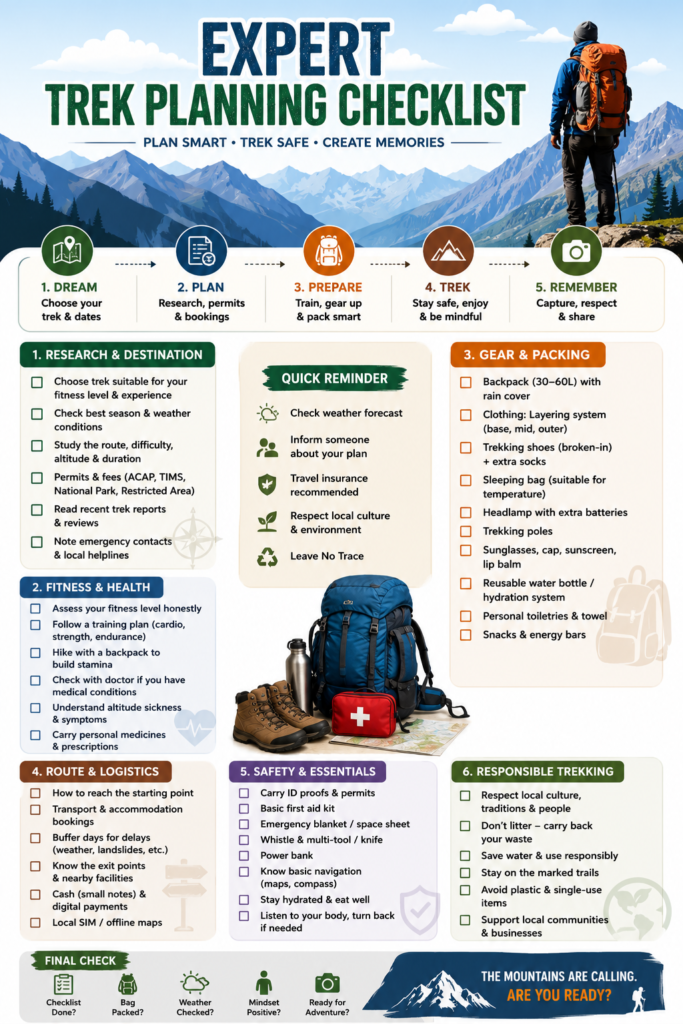
Before booking your flights, ask yourself these questions:
- Is seeing clear Himalayan peaks my highest priority?
- Do I prefer colorful forests or dry mountain scenery?
- Am I comfortable trekking with larger crowds?
- Would I rather save money by traveling during quieter periods?
- How flexible are my travel dates?
- Which altitude am I planning to reach?
- Will I be trekking independently or with a guide?
- Do I enjoy photography or wildlife observation?
Your answers often reveal the most suitable trekking season without relying solely on general recommendations.
Section Summary
The best time for trekking in Nepal depends less on finding the “perfect month” and more on matching seasonal conditions with your travel goals. Spring offers vibrant landscapes and comfortable hiking weather, while autumn provides exceptional mountain visibility and stable conditions. Understanding these differences allows beginners to make informed decisions and enjoy a safer, more rewarding Himalayan adventure.
Winter Trekking: A Different Side of the Himalayas
Winter, which generally runs from December through February, is often overlooked by first-time trekkers. Many assume that all trails become inaccessible, but that is not the case. While high mountain passes may close because of heavy snowfall, numerous lower and mid-altitude trekking routes remain open and rewarding.
One of winter’s greatest advantages is the peaceful atmosphere. Popular trails that attract hundreds of trekkers during autumn can feel surprisingly quiet. Tea houses are less crowded, guides have more availability, and photography becomes easier without large groups at every viewpoint.
Winter trekking is ideal for travelers who enjoy:
- Peaceful trails
- Crisp mountain views
- Snow-covered landscapes
- Cooler daytime temperatures
- A slower travel experience
However, winter also brings challenges. Nighttime temperatures at higher elevations can fall well below freezing. Water sources may freeze, shorter daylight hours reduce hiking time, and sudden snowfall can affect transportation.
Best Winter-Friendly Trekking Regions
Not every trek is suitable during winter, but several destinations remain excellent choices.
| Trekking Region | Winter Suitability | Why It Works |
|---|---|---|
| Ghorepani Poon Hill | Excellent | Moderate altitude and stunning sunrise views |
| Langtang Valley | Good | Beautiful snow scenery with manageable conditions |
| Mardi Himal | Good | Clear skies and fewer trekkers |
| Helambu | Excellent | Lower altitude and easy access from Kathmandu |
| Lower Everest Region | Moderate | Possible with proper preparation |
For high-altitude expeditions, always check recent weather conditions before departure.
Practical Takeaway: Winter is best for experienced planners who enjoy solitude and are prepared for cold temperatures.
Monsoon Trekking: Not Always a Bad Idea
Many travel guides dismiss Nepal’s monsoon season entirely. While heavy rain does affect many trails, the reality is more nuanced.
Monsoon typically lasts from June to August. Frequent rainfall can create muddy paths, swollen rivers, and reduced mountain visibility. Yet this season also transforms Nepal into one of the greenest landscapes in Asia.
Forests become lush, waterfalls reach their peak flow, and villages appear vibrant after the rains.
Advantages of Monsoon Trekking
For travelers who don’t mind occasional rain, there are several benefits.
- Significantly fewer tourists
- Lower accommodation costs
- Fresh green landscapes
- Quiet trekking routes
- Easier permit availability
Challenges to Consider
The disadvantages are equally important.
- Leeches in forested areas
- Slippery trails
- Cloud-covered mountains
- Flight delays
- Increased risk of landslides
The Rain Shadow Advantage
One interesting feature of Nepal is its rain shadow regions. Areas such as Upper Mustang and Dolpo receive far less rainfall because the Himalayas block monsoon clouds.
These regions often become some of Nepal’s best trekking destinations during the rainy season.
Practical Takeaway: Don’t reject monsoon trekking without considering rain-shadow destinations.
Matching the Season to Your Trekking Region
Instead of choosing a season first, many experienced trekkers begin by selecting a region.
Different parts of Nepal perform differently throughout the year.
| Trekking Region | Best Season | Secondary Season |
|---|---|---|
| Everest Region | Autumn | Spring |
| Annapurna Region | Spring | Autumn |
| Langtang | Spring | Autumn |
| Manaslu | Autumn | Spring |
| Upper Mustang | Summer | Autumn |
| Dolpo | Summer | Early Autumn |
| Kanchenjunga | Spring | Autumn |
Choosing the right season for a specific region often leads to a much better experience than following general weather advice.
Practical Takeaway: Regional weather matters more than national weather.
How Crowds Change Your Trek
Many beginners assume crowded trails automatically mean better experiences. That isn’t always true.
A busy trekking season offers advantages such as:
- Easier social interaction
- More open tea houses
- Better emergency support
- More guide availability
However, quieter seasons offer different rewards.
You may enjoy:
- Better photography
- Faster accommodation service
- Greater connection with local communities
- More peaceful viewpoints
- Flexible itineraries
Think about the kind of experience you want rather than simply following the most popular travel months.
Budget Planning by Season
Seasonal demand has a noticeable effect on travel expenses.
Peak trekking seasons generally increase costs for flights, accommodation, and guides. Off-season travel can reduce overall spending, although weather-related delays should be considered.
| Expense | Peak Season | Off Season |
|---|---|---|
| International Flights | Higher | Often Lower |
| Domestic Flights | Higher | Moderate |
| Accommodation | Higher | Lower |
| Trekking Guides | High Demand | Better Availability |
| Equipment Rental | Similar | Similar |
| Food Costs | Mostly Stable | Mostly Stable |
Budget-conscious travelers should compare savings against possible weather disruptions before choosing an off-season trek.
Practical Takeaway: Lower prices are valuable only if weather conditions still allow a safe and enjoyable trek.
Essential Packing Strategy Based on Season
Packing should reflect the season rather than a fixed checklist.
Spring
Carry lightweight layers, a waterproof jacket, sunscreen, sunglasses, trekking poles, and comfortable hiking boots.
Autumn
Pack layered clothing, a warm fleece, rain protection for unexpected showers, and insulated clothing for higher elevations.
Winter
Additional gear becomes essential.
Include:
- Down jacket
- Thermal clothing
- Insulated gloves
- Warm hat
- Thick socks
- Sleeping bag suitable for freezing temperatures
- Headlamp with spare batteries
Monsoon
Waterproof equipment is the priority.
Bring:
- Waterproof backpack cover
- Rain jacket
- Quick-drying clothing
- Waterproof boots
- Dry bags for electronics
- Trekking poles with good grip
Packing according to the season improves comfort while reducing unnecessary weight.
Common Mistakes First-Time Trekkers Make
Even experienced hikers sometimes underestimate Nepal’s mountain environment.
Avoid these common errors.
Booking Too Late
Popular trekking months fill quickly. Flights, guides, and tea houses may become fully booked weeks in advance.
Ignoring Altitude
Weather is only one factor. Altitude sickness can affect trekkers regardless of fitness level.
Always allow enough time for acclimatization.
Depending on City Weather Forecasts
Kathmandu weather rarely reflects mountain conditions.
Research forecasts for your actual trekking region.
Wearing New Boots
New footwear often causes painful blisters.
Break in your boots several weeks before departure.
Carrying Too Much
Heavy backpacks reduce energy and increase fatigue.
Pack only essential items.
Skipping Travel Insurance
Mountain rescues can be extremely expensive.
Choose insurance that specifically covers trekking at your planned altitude.
Practical Takeaway: Careful preparation prevents many problems before your trek even begins.
Expert Recommendation Box
If this is your first trek in Nepal
Choose either late March, April, late September, October, or early November.
Select a moderate-altitude trek such as:
- Ghorepani Poon Hill
- Mardi Himal
- Langtang Valley
Hire an experienced local guide if you are unfamiliar with mountain trekking.
Spend one or two days acclimatizing before beginning your trek, even if your route is considered beginner-friendly.
Focus on enjoying the journey rather than reaching the highest altitude possible.
A Simple Trek Planning Roadmap
Use this step-by-step framework to organize your trip.
Step 1: Decide your travel month.
Step 2: Select a trekking region that performs well during that season.
Step 3: Estimate your budget.
Step 4: Check permit requirements.
Step 5: Book international and domestic transportation.
Step 6: Reserve accommodation or a trekking package.
Step 7: Purchase suitable travel insurance.
Step 8: Begin physical preparation at least six to eight weeks before departure.
Step 9: Pack according to seasonal conditions.
Step 10: Monitor local weather updates before leaving.
Following a structured planning process greatly improves the chances of a successful trek.
Looking Ahead: The Future of Trekking in Nepal
Nepal’s trekking industry continues to evolve. Travelers are increasingly seeking experiences beyond the classic Everest and Annapurna routes.
Several trends are shaping future trekking adventures:
- Greater interest in community-based tourism
- Increased demand for environmentally responsible travel
- Digital trekking permits and online trip planning
- Improved mountain rescue coordination
- Growth of lesser-known trekking destinations
- Greater awareness of sustainable trekking practices
Responsible tourism is also becoming more important. Supporting locally owned lodges, minimizing plastic waste, respecting local customs, and following Leave No Trace principles help preserve Nepal’s fragile mountain ecosystems.
Frequently Asked Questions
Which month offers the clearest mountain views in Nepal?
October is widely regarded as one of the best months because post-monsoon skies are often exceptionally clear, providing excellent visibility across many trekking regions.
Is spring better than autumn?
Both seasons are excellent. Spring offers blooming forests and pleasant temperatures, while autumn generally provides more consistent weather and sharper mountain views.
Can beginners trek in Nepal?
Yes. Routes such as Ghorepani Poon Hill, Mardi Himal, and Langtang Valley are popular among beginners who prepare adequately and follow a sensible pace.
Is monsoon trekking dangerous?
It depends on the destination. Some trails become slippery and prone to landslides, while rain-shadow regions like Upper Mustang remain suitable during summer.
Do I need a guide?
Regulations can change, and some trekking areas have specific guide requirements. Even where independent trekking is allowed, hiring a licensed local guide improves safety, navigation, and cultural understanding.
How far in advance should I book?
For spring and autumn, booking flights, guides, and accommodation several months in advance is recommended to secure the best options.
Final Thoughts
The best time for trekking in Nepal depends on your priorities rather than a single “perfect” month. If your goal is clear Himalayan views and reliable weather, autumn is hard to beat. If you prefer colorful landscapes and comfortable hiking temperatures, spring is equally rewarding. Winter offers peaceful trails for well-prepared adventurers, while monsoon can be surprisingly enjoyable in Nepal’s rain-shadow regions.
Rather than following the crowd, take time to evaluate your experience level, budget, preferred trekking region, and travel expectations. Matching these factors with the right season will give you a safer, more enjoyable, and more memorable Himalayan adventure. Whether you dream of watching sunrise over Annapurna, exploring the Everest region, or discovering quieter mountain trails, thoughtful planning is the key to making the most of your trekking journey in Nepal.